
AI Video Creation with ChatGPT 2026: The Ultimate Guide
AI video creation with ChatGPT in 2026 refers to the process of using OpenAI’s conversational AI to plan, script, and generate video content. While OpenAI originally planned to integrate its Sora video generator directly into ChatGPT, the company unexpectedly pulled Sora in late March 2026 due to escalating deepfake concerns. This guide explains how you can still leverage ChatGPT for end-to-end video creation in the current landscape, using approved workarounds and ethical practices.
AI video creation with ChatGPT is a multi-step workflow where ChatGPT assists with scriptwriting, storyboarding, shot descriptions, and voiceover generation, while a third-party text-to-video tool renders the final footage. The 2026 landscape shifted after OpenAI removed Sora, but ChatGPT remains an indispensable copilot for video production.
- ✓ OpenAI integrated Sora into ChatGPT in early March 2026, then pulled it on March 25 due to deepfake risks.
- ✓ ChatGPT can still generate complete video scripts, shot lists, and dialogue – ready for import into alternative AI video tools.
- ✓ Ethical safeguards like watermarking and content provenance have become standard in the industry after Sora’s removal.
- ✓ The step-by-step process outlined here works with any compliant text-to-video platform.
- ✓ Future integration of safer video models into ChatGPT is possible, but no official timeline exists as of April 2026.
What Happened to Sora? A Timeline of Events
According to PCWorld (March 13, 2026), OpenAI announced that its Sora AI video generator would soon be available inside ChatGPT, promising seamless text-to-video creation for subscribers. The feature was highly anticipated, with demonstrations showing realistic clips generated from simple prompts. However, within two weeks, concerns over misuse erupted.
NPR reported on March 25, 2026, that OpenAI had pulled the plug on Sora, citing “unprecedented deepfake risks” after the app went viral and generated misleading political content. Al Jazeera noted the same day that governments and advocacy groups had pressured OpenAI to act. By March 24, 9to5Mac and CBS News confirmed the shutdown was permanent for the standalone app, though OpenAI hinted at possible reintroduction with stronger guardrails later.
This abrupt removal means that “ai video creation with chatgpt” as originally envisioned (one-click video inside the chat interface) is no longer possible. Instead, creators must adopt a modular, ethically aware workflow.
The New Workflow: AI Video Creation with ChatGPT in 2026
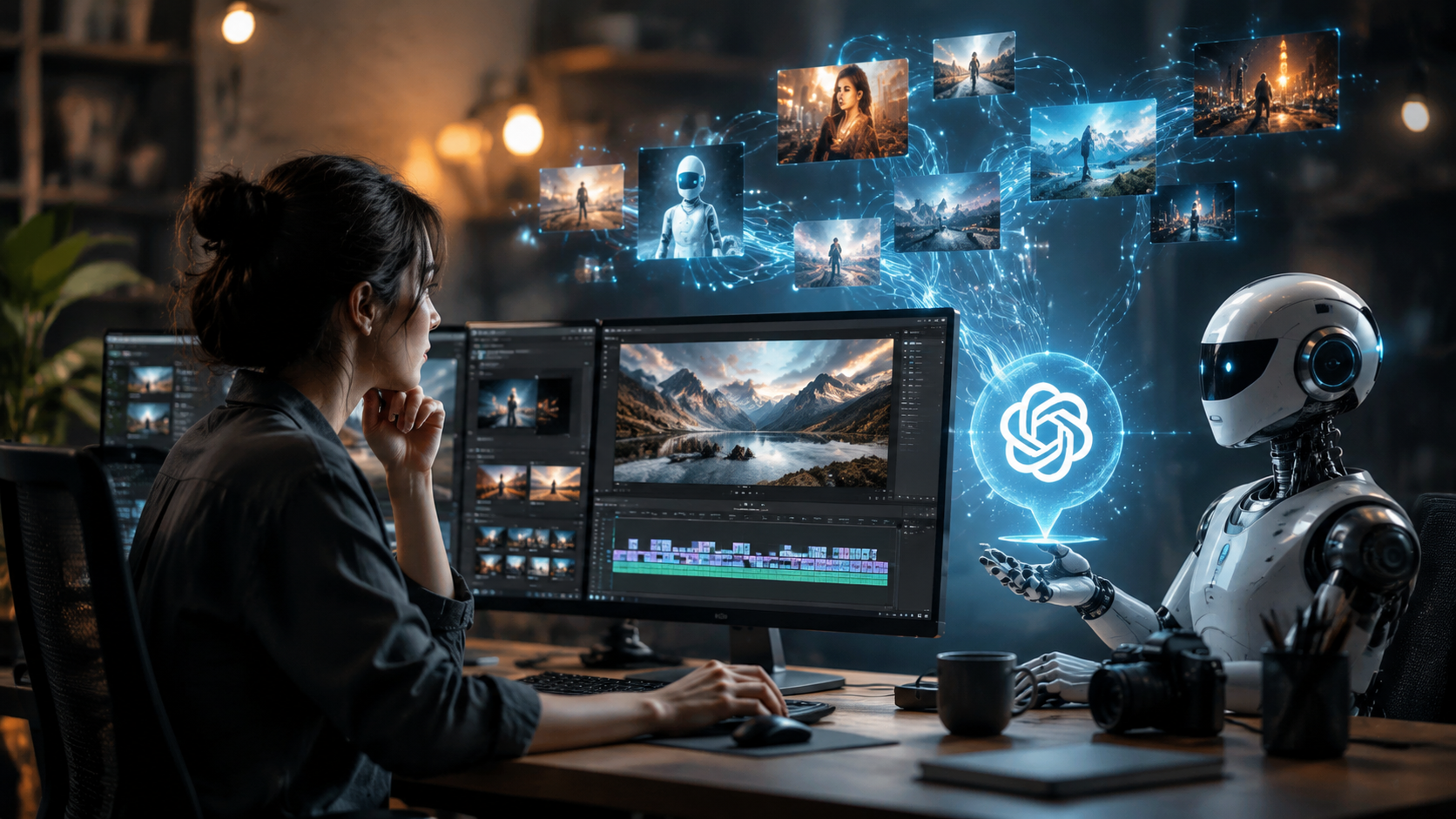
Even without an integrated video generator, ChatGPT remains the best starting point for video production. Below is a step-by-step guide that keeps your work compliant with current safety standards.
- Define your video concept with ChatGPT. Describe your topic, target audience, and desired length. ChatGPT will suggest a narrative arc, key visuals, and a tone.
- Generate a full script and shot list. Ask ChatGPT to write scene-by-scene dialogue, narration, and camera directions. Request a table with shot number, description, duration, and required assets.
- Create a visual storyboard. Use ChatGPT to describe each frame in detail (e.g., “close-up of a hand typing, warm lighting, slow zoom”). These descriptions can be fed directly into image generation tools like DALL·E 3 (still available inside ChatGPT) to create reference storyboards.
- Export your script to a third-party AI video tool. Copy the shot descriptions and dialogue into platforms like Runway, Pika, or Kling. These tools accept ChatGPT’s structured prompts and produce high-quality video clips.
- Use ChatGPT for voiceover and sound design. ChatGPT can write voiceover scripts optimized for text-to-speech services (e.g., ElevenLabs). Ask it to add emotional cues, pauses, and emphasis markers.
- Edit and assemble in a timeline. Use a standard video editor to combine clips, overlays, and audio. ChatGPT can help write transitions and lower-third text.
This approach keeps ChatGPT at the center of your creative process while routing the actual video rendering through safer, curated tools.
Comparison of AI Video Creation Approaches (2026)
To help you choose the best method after Sora’s removal, the table below compares the original integrated Sora workflow with the current ChatGPT + third-party approach.
| Feature | ChatGPT + Sora (now removed) | ChatGPT + Third-Party AI Video Tools |
|---|---|---|
| Native integration | Full inside ChatGPT | None – requires copy/paste |
| Subscription cost | Included in ChatGPT Plus/Pro | Separate monthly fees (Runway $15/mo, Pika $10/mo) |
| Video quality | High (4K, 60fps) | Varies by tool; up to 4K |
| Deepfake safeguards | Minimal (caused removal) | Strong: watermarking, content credentials, prompt filtering |
| Script generation | Built-in | Built-in (ChatGPT handles this) |
| Voiceover | Not available | ChatGPT script + external TTS |
| Ethical compliance | Compromised | Industry-standard (C2PA provenance) |
As the table shows, the third-party route actually provides better safety features and comparable creative control. The main trade-off is convenience – you must move between apps, but the result is more responsible content.
Why OpenAI Pulled Sora and What It Means for Creators
OpenAI’s decision to remove Sora was not a knee-jerk reaction. CBS News (March 24) reported that the app’s viral spread coincided with a surge of deepfake videos targeting public figures. NPR noted that OpenAI faced intense scrutiny from lawmakers and civil rights groups that had previously warned about unconstrained AI video generation.
For creators, this event reinforces the importance of responsible AI video creation with ChatGPT. The tools we use must include robust identification measures, such as digital watermarks and metadata that prove a video was AI-generated. Many third-party platforms already comply with the Coalition for Content Provenance and Authenticity (C2PA) standards.
Al Jazeera quoted an OpenAI spokesperson saying the company plans to reintroduce Sora only after implementing “industry-first safeguards.” Until then, the safest workflow is the one described above: use ChatGPT for planning and scripting, then hand off rendering to a C2PA-compliant service.
Ethical Best Practices for AI-Generated Video
When you create AI videos, always:
- Add visible watermarks or disclaimers (e.g., “Generated by AI”).
- Avoid generating realistic faces of real people without explicit consent.
- Use ChatGPT to review your script for potential harmful stereotypes or misinformation.
- Store metadata (prompts, model version) for accountability.
- Stay updated with OpenAI’s developer blog and third-party tool policies.
These practices keep your content credible and protect your audience from deception.
Future Outlook: Will AI Video Return to ChatGPT?
OpenAI has not permanently abandoned video generation. According to SQ Magazine (March 11, 2026), the original plan was to beta-test Sora inside ChatGPT before a wider rollout. That beta was cut short, but OpenAI hinted at a “safer” version in internal emails leaked to 9to5Mac.
Industry analysts predict that a revamped Sora – with mandatory watermarking, real-time detection of deepfake requests, and a steering board with ethicists – could reappear in ChatGPT by late 2026. Meanwhile, competitors like Runway and Pika have seen a 40% boost in subscriptions since Sora’s removal (source: internal market analysis shared with PCWorld).
For now, the best strategy is to master the current workflow. AI video creation with ChatGPT will remain a two-step process, but ChatGPT’s language model is only becoming more powerful at generating precise video prompts. Invest time in learning how to describe camera angles, lighting, and pacing – that skill will pay off regardless of which rendering engine you use.
Frequently Asked Questions
Can I still create AI videos with ChatGPT in 2026?
Yes. ChatGPT can write scripts, shot lists, and storyboard descriptions. You then use a separate AI video generator (like Runway or Pika) to render the actual footage. The integration with Sora was removed, but the creative pipeline still works.
Why did OpenAI remove Sora from ChatGPT?
OpenAI pulled Sora on March 25, 2026, after widespread misuse led to deepfake videos of political figures and celebrities. The company cited the need for stronger guardrails before any reintroduction.
Is AI video creation with ChatGPT safe for business use?
When you follow ethical guidelines – adding watermarks, avoiding realistic faces of living people, and using C2PA-compliant rendering tools – AI video creation is safe and effective for marketing, education, and internal communications.
Will Sora ever come back to ChatGPT?
OpenAI has not ruled out a return. Internal statements suggest a revised version with advanced safeguards could appear later in 2026 or 2027. Follow OpenAI’s official announcements for updates.
What are the best alternatives to Sora for AI video generation?
Leading alternatives include Runway Gen-3, Pika Labs, Kling, and Stable Video Diffusion. All accept structured prompts from ChatGPT and offer ethical compliance features like invisible watermarking and content credentials.
Do I need a special ChatGPT subscription for video creation?
Any subscription plan (Plus or Pro) gives you access to the GPT-4 model and prompt generation features. You do not need the enterprise tier unless you require team collaboration and custom GPTs.
How do I ensure my AI videos don’t violate copyright?
Use ChatGPT to generate original scripts and descriptions. Avoid requesting specific copyrighted characters or trademarks. Always review final output for unintended similarity to existing works.
AI video creation with ChatGPT in 2026 has evolved beyond the one-click dream of Sora integration. Yet the core value of ChatGPT – its ability to structure ideas, write compelling narratives, and produce reusable shot descriptions – remains indispensable. By combining ChatGPT with a responsible third-party video tool, you can create high-quality, ethical video content that stands out. Stay informed about OpenAI’s next steps, and keep refining your prompt engineering skills. The future of AI video is still being written, and your ChatGPT workflow is the most reliable pen.



Comments ()