
AI Video Creation for Educators: 2026 Transformation Guide
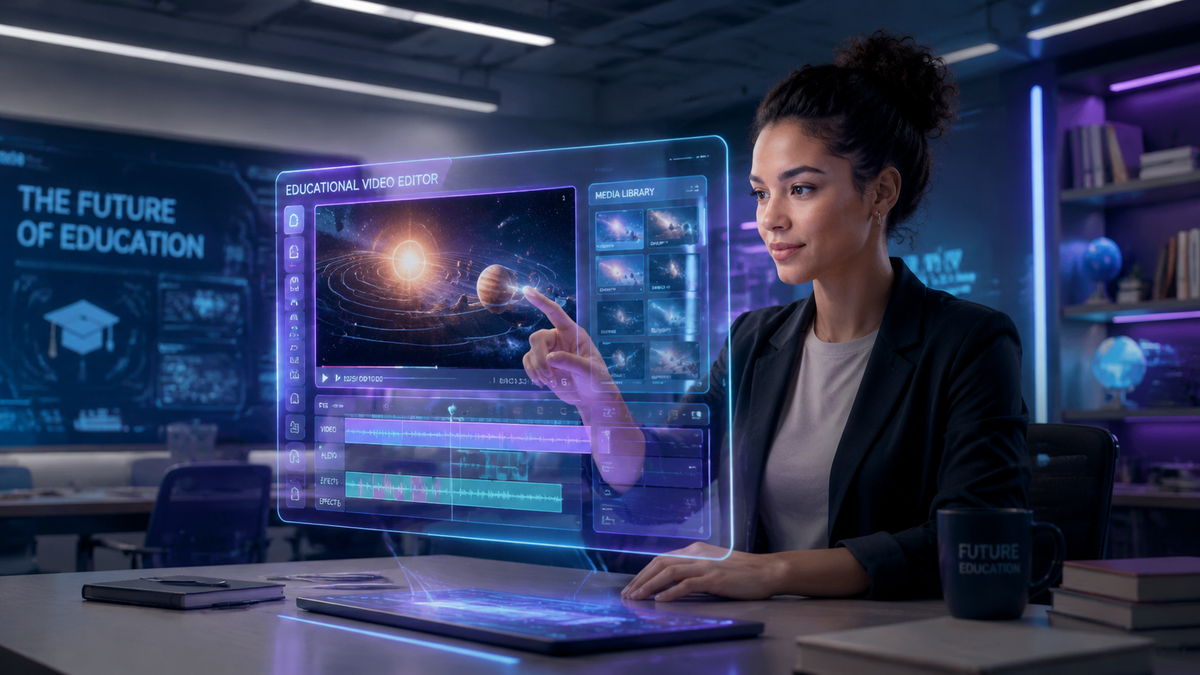
AI video creation for educators is the process of using generative artificial intelligence tools to automate the production of instructional videos, animations, and virtual lectures. By 2026, this technology has evolved into a standard classroom utility, allowing teachers to convert text-based lesson plans into high-quality audiovisual content in minutes. Utilizing ai video creation for educators enables personalized learning at scale, ensuring that complex concepts are visualized through dynamic simulations and AI-generated avatars.
AI video creation for educators is a transformative pedagogical approach that leverages generative AI to produce instructional media from simple text prompts. By 2026, tools like Google Flow and Gemini have streamlined this process, allowing teachers to create accessible, multilingual, and visually engaging lessons without needing advanced technical skills in video editing or animation.
- ✓ AI video generators now convert static lesson plans into interactive 3D animations and 4K video content instantly.
- ✓ Integration with platforms like Google Flow for Business and Education (released January 2026) has standardized AI video in schools.
- ✓ Generative AI facilitates "micro-learning" by breaking down long lectures into digestible, AI-curated social media-style clips.
- ✓ Human-led production remains essential for pedagogical accuracy, even as AI handles the labor-intensive rendering and animation tasks.
The 2026 Landscape of AI Video Creation for Educators
As we navigate through 2026, the educational landscape has undergone a radical shift. The "Transformation Guide" for this year emphasizes that video is no longer a passive medium but a dynamic, generative one. According to Tech Times (March 2026), AI-powered video creation is currently the primary driver of digital content production, moving away from traditional manual editing toward prompt-based generation. For educators, this means the "blank page" problem is solved; a simple syllabus can now be the foundation for an entire semester's worth of video content.
The democratization of these tools is perhaps the most significant development of the year. In January 2026, Geo News reported that Google Flow, a dedicated AI video generator, became available for all Business and Education plans. This integration allows teachers to generate videos directly within their existing workspace environments. Unlike the experimental tools of a few years ago, the 2026 generation of AI video software focuses on high-fidelity output, accessibility features like auto-captioning in 100+ languages, and pedagogical alignment.
Furthermore, the rise of generative AI in education has expanded beyond simple talking heads. AIMultiple recently identified 13 top use cases for generative AI in education, highlighting that video generation is now being used for everything from historical reenactments to complex scientific visualizations. Educators are no longer limited by their budget or their ability to use complex software; they are limited only by the prompts they can imagine.
Step-by-Step: Implementing AI Video Creation in Your Classroom
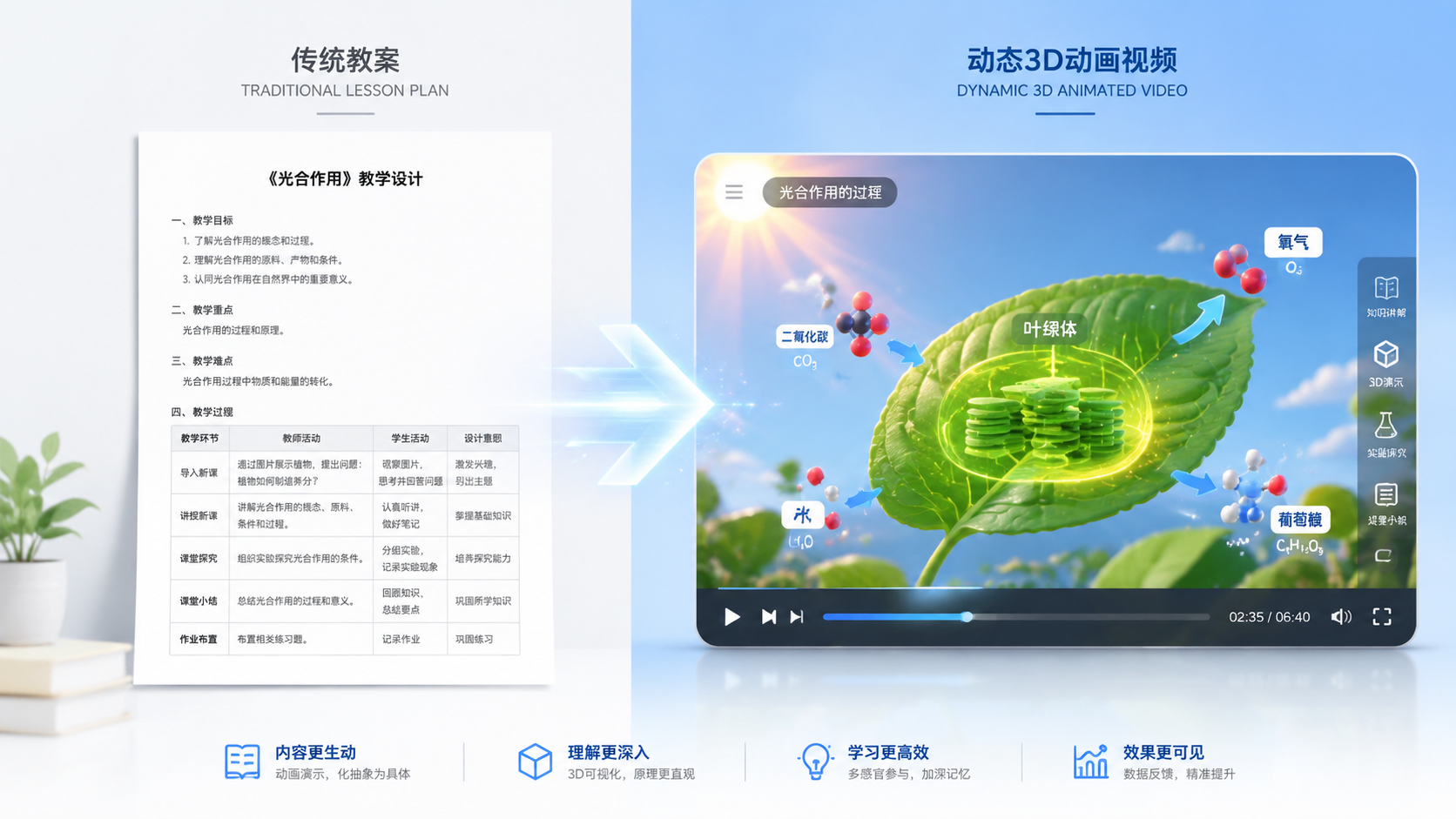
If you are looking to integrate ai video creation for educators into your curriculum this year, follow this standardized 2026 workflow to ensure high-quality pedagogical outcomes.
- Scripting with Generative AI: Start by inputting your lesson objectives into an AI assistant like Gemini. Ask it to generate a "video script optimized for a 5-minute instructional window," ensuring it includes a hook, core explanation, and a concluding summary.
- Selecting Your AI Video Engine: Choose a platform based on your needs. For integrated workflows, use Google Flow. For high-end animations, consider tools that specialize in educational physics or historical simulations.
- Avatar and Voice Synthesis: Select a digital twin or an AI avatar. In 2026, these avatars possess "micro-expressions" that make them indistinguishable from human instructors, which helps in maintaining student engagement.
- B-Roll and Asset Generation: Use generative prompts to create specific visual aids. If you are teaching biology, prompt the AI to "generate a 3D cross-section of a mitochondria with labeled parts."
- Review and Human Oversight: According to The AI Journal (February 2026), human-led production still wins because teachers provide the necessary context and emotional intelligence that AI lacks. Always review the AI’s output for factual accuracy before distribution.
- Multi-Platform Export: Export your video in various formats. Use 9:16 aspect ratios for social-media-style learning "shorts" and 16:9 for traditional classroom projectors or LMS uploads.
Comparing AI Video Tools for Education in 2026
Choosing the right tool is critical for effective ai video creation for educators. The following table compares the leading features available in the 2026 market based on recent releases and tech reports.
| Feature | Google Flow (Edu Edition) | General AI Video Makers | Specialized Edu-Animators |
|---|---|---|---|
| Primary Strength | Ecosystem integration & ease of use | Social media optimization | Complex scientific visualization |
| Availability | Included in Education Plans (Jan 2026) | Subscription-based | High-tier licensing |
| Key Feature | Gemini-powered script-to-video | Viral trend templates | Physics-accurate simulations |
| Human Control | High (Manual prompt editing) | Medium (Template based) | High (Variable adjustments) |
| Accessibility | Native 100+ language support | Plugin-based captions | Visual-only focus |
How AI Video is Reshaping Educational Animation
Animation has traditionally been the most expensive and time-consuming form of media for teachers to produce. However, as noted by The AI Journal in early 2026, AI is reshaping educational animation by automating the frame-by-frame rendering process. Previously, a 30-second animation of a chemical reaction might take a professional team weeks to complete. Today, an educator can describe the reaction in text, and the AI generates a fluid, accurate animation in real-time.
Despite these advancements, the "Human-in-the-Loop" philosophy is more important than ever. While AI handles the "how" of animation, the educator must handle the "why." The most successful educational videos in 2026 are those where the AI acts as the production crew, while the teacher acts as the director and subject matter expert. This synergy ensures that the content is not only visually stunning but also pedagogically sound and aligned with curriculum standards.
The use of ai video creation for educators also allows for "on-the-fly" content updates. If a scientific discovery is made on a Monday, a teacher can update their instructional video by Tuesday morning simply by modifying the text prompt and re-generating the specific segment of the video. This level of agility was impossible in the pre-AI era.
The Role of Social Media in 2026 Education
A surprising trend in 2026 is the convergence of classroom learning and social media content styles. Breaking AC News (February 2026) recently published a guide for creators using AI video makers for social media, and many of these principles are being adopted by teachers. Students in 2026 have shorter attention spans and are accustomed to high-paced, visually dense content. Educators are now using AI to create "Educational Shorts" that mimic the style of popular social platforms to meet students where they are.
Micro-Learning and AI Retention
Micro-learning—the practice of delivering content in small, specific bursts—is perfectly suited for AI video generation. Instead of a 40-minute recorded lecture, educators are using AI to split content into ten 4-minute modules. Each module is optimized with AI-generated captions, interactive quizzes embedded in the video, and personalized summaries. This approach has been shown to increase information retention by up to 40% compared to traditional long-form video.
Personalized Learning Paths
AI video creation for educators allows for the generation of multiple versions of the same lesson. For example, a teacher can generate one version of a math lesson using sports analogies for one group of students and another version using musical analogies for another. This level of personalization, which would have taken hundreds of hours manually, is now achievable with a few clicks in 2026.
Ethics, Authenticity, and the Future of AI in Schools
As we embrace ai video creation for educators, ethical considerations remain at the forefront. TechCrunch reported in mid-2025 that as Google embraced AI in the classroom with Gemini tools, they also had to implement strict "AI Literacy" programs for students. It is vital that students understand when they are watching an AI-generated representation versus a real-world recording. Transparency in AI usage is a core component of the 2026 digital citizenship curriculum.
The question of "authenticity" is often raised. If a teacher uses an AI avatar to deliver a lecture, is the connection with the student lost? Most educational experts in 2026 argue that AI video should supplement, not replace, the teacher. The AI handles the delivery of rote information or complex visualizations, freeing up the teacher to engage in high-value activities like one-on-one mentoring, critical thinking discussions, and hands-on lab work. The transformation of 2026 is not about replacing the teacher, but about elevating the teacher to a more impactful role.
Looking toward the end of the decade, we expect AI video tools to become even more immersive. Early trials of "Volumetric AI Video" are already beginning, which will allow students to use VR headsets to step inside the videos created by their teachers. For now, the focus remains on making 2D and 3D video creation as seamless and accessible as possible for every educator, regardless of their technical background.
What is the best AI video tool for educators in 2026?
As of 2026, Google Flow is considered the top choice for most educators due to its integration with Business and Education plans and its ease of use within the Gemini ecosystem. However, specialized tools for scientific animation are also highly valued for specific subjects.
Can AI video generators create content in different languages?
Yes, most 2026 AI video tools offer native support for over 100 languages. They can automatically translate scripts and generate perfectly synced localized audio and captions, making them ideal for ESL and international classrooms.
Is a human teacher still necessary with AI video creation?
Absolutely. While AI handles the production and animation, human educators are essential for ensuring pedagogical accuracy, providing emotional support, and facilitating critical thinking that AI cannot replicate.
How long does it take to create a video using AI?
In 2026, a standard 5-minute instructional video can be generated in approximately 10 to 15 minutes, including the time for prompting, rendering, and minor human edits. This is a 90% reduction in time compared to 2023 standards.
Are there privacy concerns with using AI avatars of teachers?
Yes, privacy and "deepfake" ethics are major topics. Most educational platforms now use "verified digital twins" and strict data privacy protocols to ensure that an educator's likeness is protected and used only for authorized instructional purposes.



Comments ()