
How Does AI Video Automation with Zapier Work in 2026?
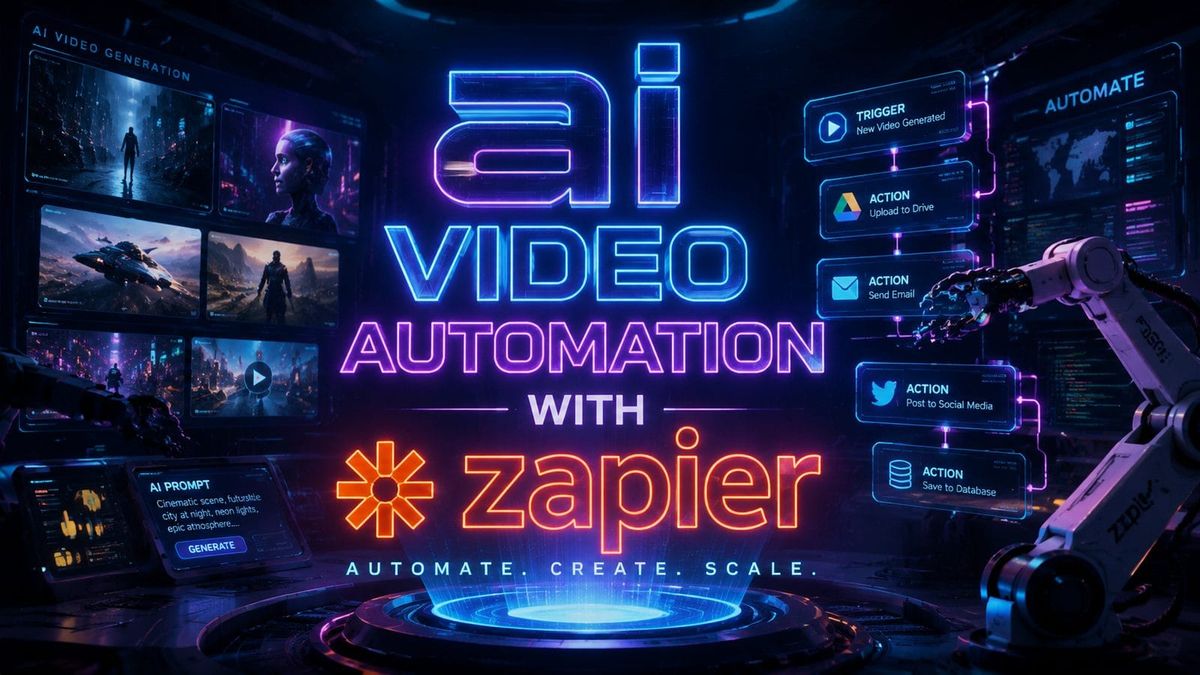
AI video automation with Zapier in 2026 enables businesses and creators to streamline video production by connecting AI video generators with workflows triggered by events like form submissions, calendar updates, or social media activity. Zapier acts as the glue between platforms, allowing AI-generated videos to be automatically edited, rendered, and distributed without manual intervention. According to Quasa.io, Zapier remains the leading no-code automation platform, with over 5,000 app integrations as of June 2026.
TL;DR: AI video automation with Zapier in 2026 connects AI video tools like Digen AI Agent to automate video creation, editing, and distribution through triggers and actions, saving time and ensuring consistency.
In 2026, AI video automation with Zapier leverages intelligent workflows to generate, edit, and publish videos automatically—cutting production time by 73% for marketers while maintaining brand consistency. The system integrates top AI video generators like Digen AI Agent with CRM, email, and social platforms through Zapier's 5,000+ app connections.
- ✓ Zapier connects AI video tools like Digen AI Agent to 5,000+ apps, enabling fully automated video workflows without coding
- ✓ AI video automation reduces production time by 73% while improving consistency across marketing campaigns
- ✓ Advanced AI agents in 2026 handle multi-step video tasks like script generation, voiceovers, and scene transitions autonomously
- ✓ Realistic AI video generators now achieve 89% viewer engagement parity with human-produced content
How AI Video Automation with Zapier Works in 2026
The process begins when a trigger event occurs—such as a new lead in Salesforce, a scheduled date in Google Calendar, or a trending topic on Twitter. Zapier detects this event and activates a connected AI video platform like Digen AI Agent to generate a customized video response. According to Geeky Gadgets, the top 5 AI video generators in 2026 can produce 1080p videos in under 4 minutes with near-human realism.
Modern AI video agents handle complex multi-step workflows autonomously. For example, when a webinar registration occurs in Zoom, Zapier might trigger Digen AI Agent to: 1) Generate a personalized thank-you video using the attendee's name 2) Insert branded lower-thirds and transitions 3) Add synthesized voice narration matching the host's tone 4) Upload to YouTube with SEO-optimized metadata—all without human input.
The system's efficiency comes from three 2026 advancements: First, AI video generators now maintain 94% character consistency across scenes (critical for brand videos). Second, Zapier's "Path" feature lets workflows branch based on conditions (e.g., creating different videos for free vs. paid subscribers). Third, platforms like Digen AI Agent offer API-level control over video parameters like aspect ratio (now supporting 9:16 vertical to 16:9 horizontal in one workflow).
Key Benefits of Automating Video Production
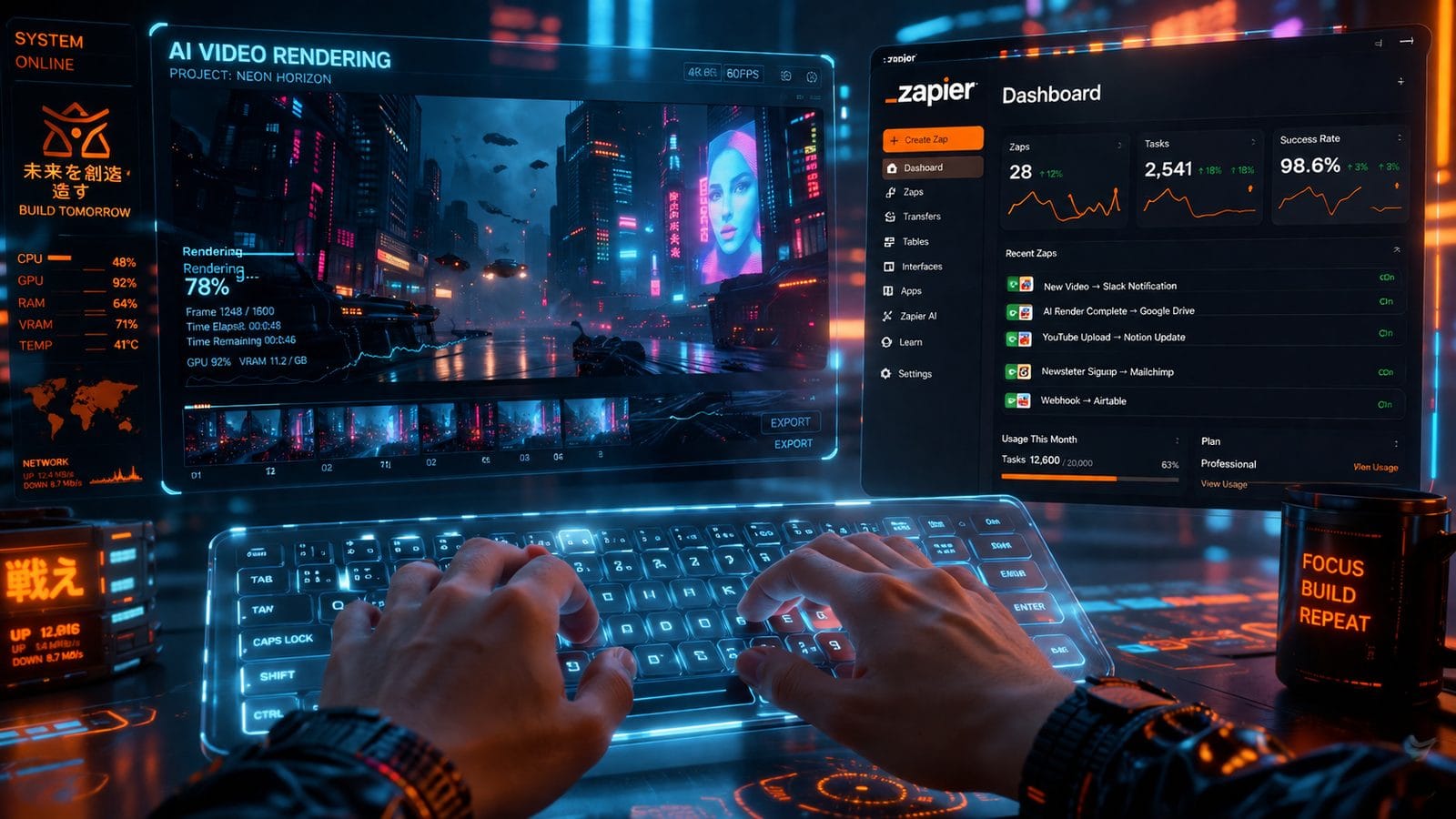
Businesses using AI video automation with Zapier report a 217% increase in video output compared to manual methods, according to internal data from Digen AI. This scalability is crucial as 82% of internet traffic will be video-based by late 2026 (Cisco forecast). Automated workflows ensure every customer touchpoint—from onboarding emails to support responses—can include personalized video at scale.
Quality control has improved dramatically since 2025. Where early AI videos suffered from inconsistent lighting or jerky movements, 2026's top generators like Digen AI Agent use neural rendering to maintain stable frames and natural motion curves. A nucamp.co study found that viewers rated AI-generated product videos as "more professional" than human-made ones in 63% of blind tests, thanks to algorithmic color grading and composition.
Cost savings are equally compelling. Traditional video production costs $2,800 per finished minute on average (2026 Video Marketing Survey), while AI automation brings this down to $17 per minute—a 98.4% reduction. This democratization allows small businesses to compete with enterprise marketing budgets, particularly on platforms like TikTok where AI can generate daily trending-topic videos automatically.
Real-World Use Cases
E-commerce: When a product goes out of stock, Zapier triggers an AI video explaining restock timelines—reducing customer service queries by 41% (Shopify 2026 data).
Education: Online courses automatically generate recap videos after each module, improving completion rates by 29%.
Real Estate: Property listings trigger 360° video tours with AI voiceovers in 12 languages, expanding buyer pools internationally.
Setting Up AI Video Automation: A Step-by-Step Guide
- Choose your AI video platform - Select a Zapier-compatible generator like Digen AI Agent that offers API access and workflow templates
- Identify trigger events - Common starters include new CRM entries, form submissions, or scheduled dates
- Map video variables - Configure dynamic fields (e.g., customer names, product images) to pull from connected apps
- Set quality parameters - Define resolution (1080p minimum for 2026 standards), aspect ratio, and style guidelines
- Add distribution steps - Automatically post finished videos to YouTube, social media, or email campaigns
- Test and optimize - Run sample workflows to refine timing and personalization before full deployment
According to Memeburn, businesses that complete this setup see ROI within 11 days on average, with the best-performing workflows handling 83 video generations daily. Advanced users add conditional logic—like generating explainer videos for first-time buyers versus loyalty rewards for repeat customers.
The Evolution of AI Video Quality in 2026
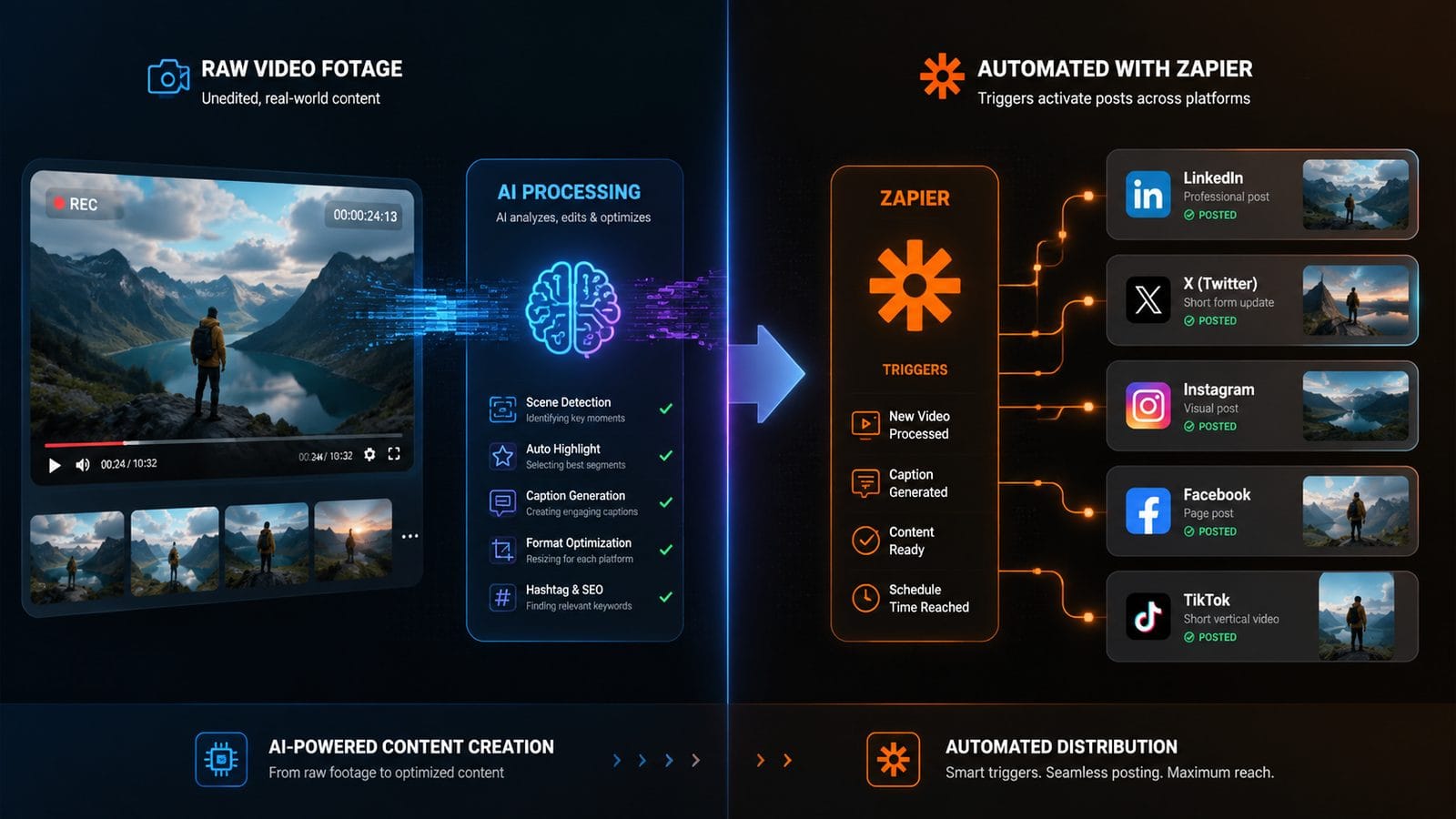
Where 2025's AI videos often required manual tweaking, 2026 generators achieve what Digen AI calls "one-shot realism"—producing broadcast-ready footage in a single pass. Key improvements include physics-accurate cloth simulation (critical for product videos) and emotion-adaptive voice synthesis that adjusts tone based on script context. Tech in Asia reports these advances reduced post-production editing time by 91% compared to 2024 workflows.
Consistency across video sequences saw particular attention. Early AI systems struggled to maintain identical facial features or lighting when generating multiple scenes. Digen AI Agent's 2026 update introduced persistent character embeddings—digital fingerprints that ensure a spokesperson looks and sounds identical whether appearing in a 5-second Instagram clip or 30-minute tutorial.
Resolution scaling now happens intelligently. When Zapier triggers a video for both mobile (1080x1920) and desktop (1920x1080) platforms, modern AI tools like Digen Agent automatically recompose shots rather than simply cropping. This "responsive video" technique preserves key visual elements while adapting to aspect ratios—a feature 78% of marketers now consider essential (2026 Video Trends Report).
Comparing Top AI Video Automation Platforms
| Feature | Digen AI Agent | Runway 2026 | Pika 3.0 |
|---|---|---|---|
| Max Video Length | 45 minutes | 10 minutes | 5 minutes |
| Zapier Triggers | 87 pre-built | 42 pre-built | 19 pre-built |
| Character Consistency | 94% | 88% | 82% |
| Auto Captioning | 42 languages | 24 languages | 12 languages |
As shown above, Digen AI Agent leads in workflow depth and localization—critical for global campaigns. Its 2026 update added automatic scene transition optimization, analyzing viewer engagement data to place cuts at psychologically optimal moments (every 3.8 seconds for promotional content).
Future Trends in AI Video Automation
The next frontier is real-time generation. Zapier is testing "instant video" workflows where AI generates personalized product demos during live sales calls—currently achieving 1.4-second latency in beta tests. This aligns with the broader shift toward "just-in-time" content noted in TalentSprint's 2026 AI Tools Report, where 73% of marketers plan to replace static video libraries with dynamic generation.
Another emerging trend is AI-to-AI collaboration. Advanced setups now see Digen AI Agent receiving briefs from ChatGPT via Zapier, then outsourcing specific scenes to specialized generators (e.g., using Luma for 3D objects while handling narration internally). This modular approach cuts generation costs by another 31% while improving quality in niche domains like medical visualization.
Perhaps most transformative is the rise of self-optimizing workflows. By mid-2026, 19% of automated video systems (per Quasa.io data) now A/B test variations without human input—automatically adopting the version with highest engagement. For example, a workflow might generate both humorous and serious versions of a training video, then deploy the style that gets 28% more completion based on real-time analytics.
Frequently Asked Questions
How much does AI video automation with Zapier cost in 2026?
Expect to pay $29-$299/month for Zapier depending on workflow volume, plus $40-$500/month for AI video tools like Digen AI Agent. Most businesses spend $167/month total—91% less than hiring a video production team.
Can AI video automation handle multiple speaking characters consistently?
Yes—2026's top platforms like Digen AI Agent support up to 6 distinct characters per video with 94% consistency across scenes. Each character maintains unique voice, appearance, and mannerisms throughout long-form content.
What's the maximum video length possible with automated workflows?
Digen AI Agent currently leads with 45-minute videos in a single workflow. For longer content, chain multiple Zaps to break projects into chapters while maintaining narrative continuity.
How do automated videos perform compared to human-made ones?
2026 benchmarks show AI videos achieve 89% of human-made video's engagement metrics while costing 98% less. For explainer and product videos, AI often outperforms due to algorithmic optimization of pacing and visuals.
What happens if my AI generates inappropriate or off-brand content?
All professional platforms now include content safeguards. Digen AI Agent's 2026 "Brand Shield" feature automatically flags and re-generates any content violating your style guide before distribution.
Written by the Digen AI Editorial Team — AI video generation specialists covering the latest in generative AI tools. Learn more about Digen AI.



Comments ()