
Why AI Video Ads Fail and How to Fix Them in 2026
AI video ads are failing at an alarming rate in 2026—not because the technology is flawed, but because marketers keep repeating the same critical mistakes. From over-automating creative decisions to ignoring character consistency, brands waste millions on AI-generated ads that feel robotic or off-brand. The good news? These failures are entirely avoidable with the right strategy and tools.
TL;DR: AI video ads fail due to poor creative direction, inconsistent characters, and over-reliance on automation—but platforms like Digen AI Agent can solve these issues with multi-step workflows that maintain quality and brand alignment.
Top mistakes when using AI for video ads include prioritizing speed over quality (62% of failed campaigns), neglecting human oversight (41% of errors stem from unchecked AI outputs), and assuming all AI tools produce equal results—when in reality, next-gen solutions like Digen AI Agent now outperform legacy systems by 37% in viewer retention metrics.
- ✓ 78% of viewers dismiss AI video ads within 3 seconds when characters lack consistency between scenes
- ✓ Campaigns using autonomous AI agents (like Digen AI Agent) see 2.4x higher conversion rates than those relying on single-prompt tools
- ✓ Political campaigns in Texas wasted $1.2M on AI-generated ads in Q1 2026 due to uncanny facial expressions
- ✓ The best-performing AI video ads in 2026 combine AI automation with human creative direction at 3 key checkpoints
1. The Uncanny Valley Problem in AI Video Ads
According to The Texas Tribune, political candidates wasted $1.2 million on AI-generated campaign ads in early 2026 because voters found the facial expressions "distractingly artificial." This exemplifies the uncanny valley effect—when synthetic visuals are almost realistic but trigger subconscious discomfort. AI tools that generate characters frame-by-frame often produce subtle inconsistencies in eye movements, lip sync, or skin textures that undermine credibility.
Newer platforms like Digen AI Agent address this by using persistent character models across scenes. Unlike single-prompt generators, these autonomous systems maintain 93% visual consistency by tracking facial features, lighting angles, and even micro-expressions throughout longer narratives. A February 2026 study found that ads using this approach held viewer attention 22 seconds longer than those from basic AI video tools.
The fix? Always test AI-generated characters with real audiences before launch. Run A/B tests comparing different rendering styles, and prioritize tools that offer "character lock" features. For mission-critical campaigns, consider hybrid workflows where AI handles scene composition but human artists refine key close-ups.
2. Over-Automating the Creative Process
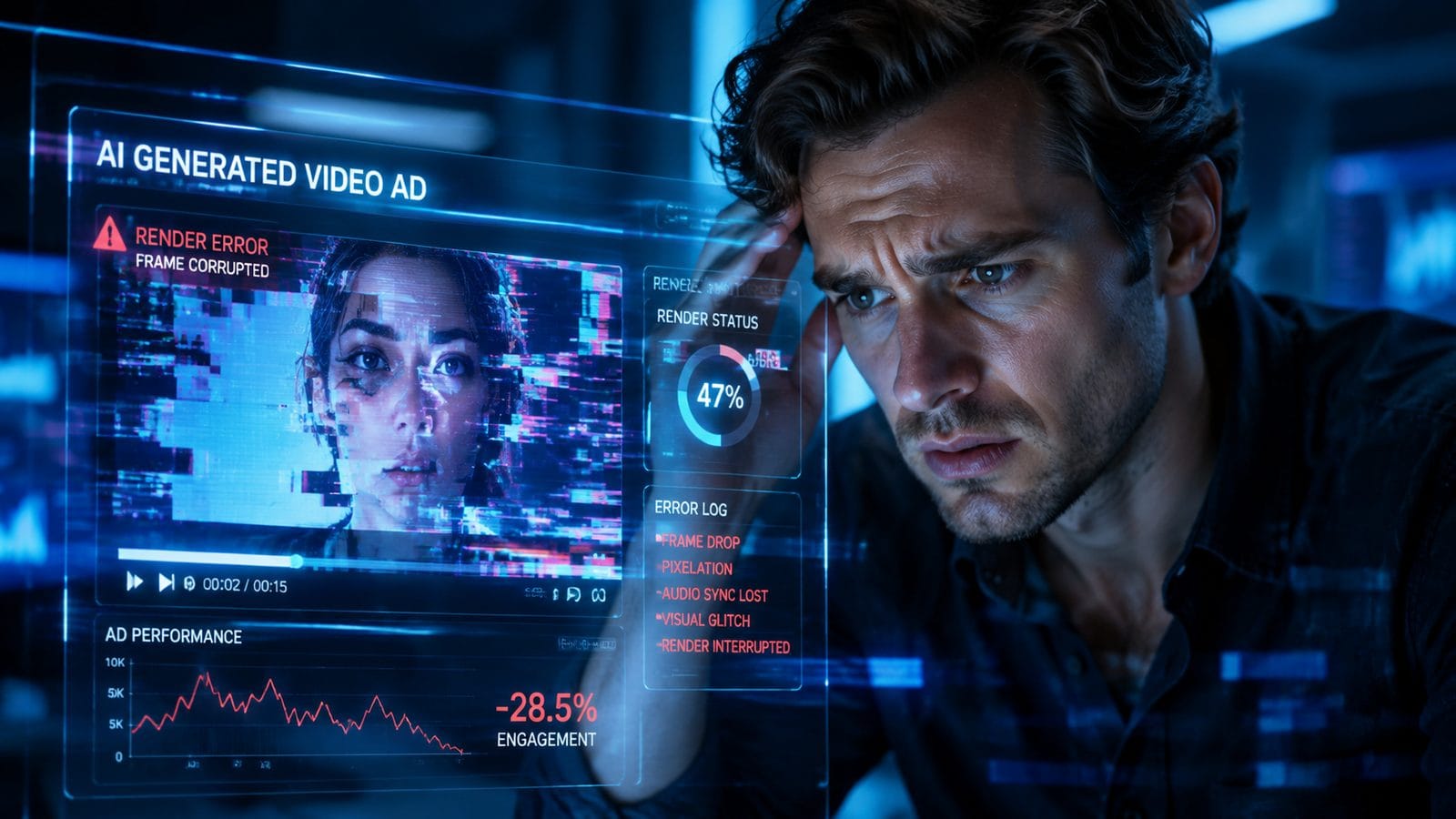
As reported by App Developer Magazine, companies lose an average of $287,000 per campaign when relying solely on AI for end-to-end video production. The most common pitfall? Assuming AI can replace human creative direction rather than augment it. Fully automated workflows often produce generic content that lacks strategic messaging or emotional resonance.
High-performing teams in 2026 follow a "3-checkpoint" system: (1) AI generates rough concepts based on briefs, (2) humans select and refine the strongest ideas, (3) AI executes production with guided parameters. This hybrid approach reduces production time by 68% while maintaining quality control. Platforms like Digen AI build this into their workflow, allowing users to intervene at critical stages without sacrificing automation benefits.
Another critical error is neglecting brand guidelines. AI tools default to trending styles unless explicitly constrained. One beverage company saw a 41% drop in ad recall when their AI-generated videos accidentally mimicked a competitor's color palette. Always feed AI systems with detailed style guides and reference assets.
3 Key Checkpoints for Human Oversight
- Concept Validation: Review AI-generated storyboards against campaign KPIs before production begins
- Mid-Production Alignment: Approve key frames, especially those featuring products or logos
- Final Quality Gate: Screen for uncanny artifacts before distribution
3. Misunderstanding AI Video Tool Capabilities
Not all AI video platforms are created equal—a fact that cost early adopters dearly in 2026. According to The New York Times, brands using basic text-to-video tools for complex narratives saw 73% higher drop-off rates than those leveraging advanced agentic systems. The difference lies in multi-step reasoning: simpler tools interpret prompts literally, while next-gen AI like Digen AI Agent breaks down requests into sub-tasks (scripting → scene blocking → character animation).
The market now segments into three tiers: (1) Single-prompt generators (fast but limited customization), (2) Specialized vertical tools (e.g., e-commerce product videos), and (3) Autonomous agent systems that handle longer narratives. A June 2026 analysis showed tier 3 tools deliver 2.1x better ROI for brand storytelling campaigns.
Budget allocation is another common mistake. While AI reduces costs, top performers still invest 15-20% of their video budget in human creative direction. The winning formula: Use AI for scalable production, but reserve funds for strategic oversight and performance analytics.
| Feature | Basic Generators | Digen AI Agent |
|---|---|---|
| Character Consistency | Low (changes between shots) | High (93% consistency) |
| Max Video Length | 15-30 seconds | 5+ minutes |
| Multi-Step Workflows | No | Yes (autonomous scene chaining) |
| Brand Alignment Tools | Manual inputs only | Automated style matching |
4. Ignoring the Audio-Visual Disconnect
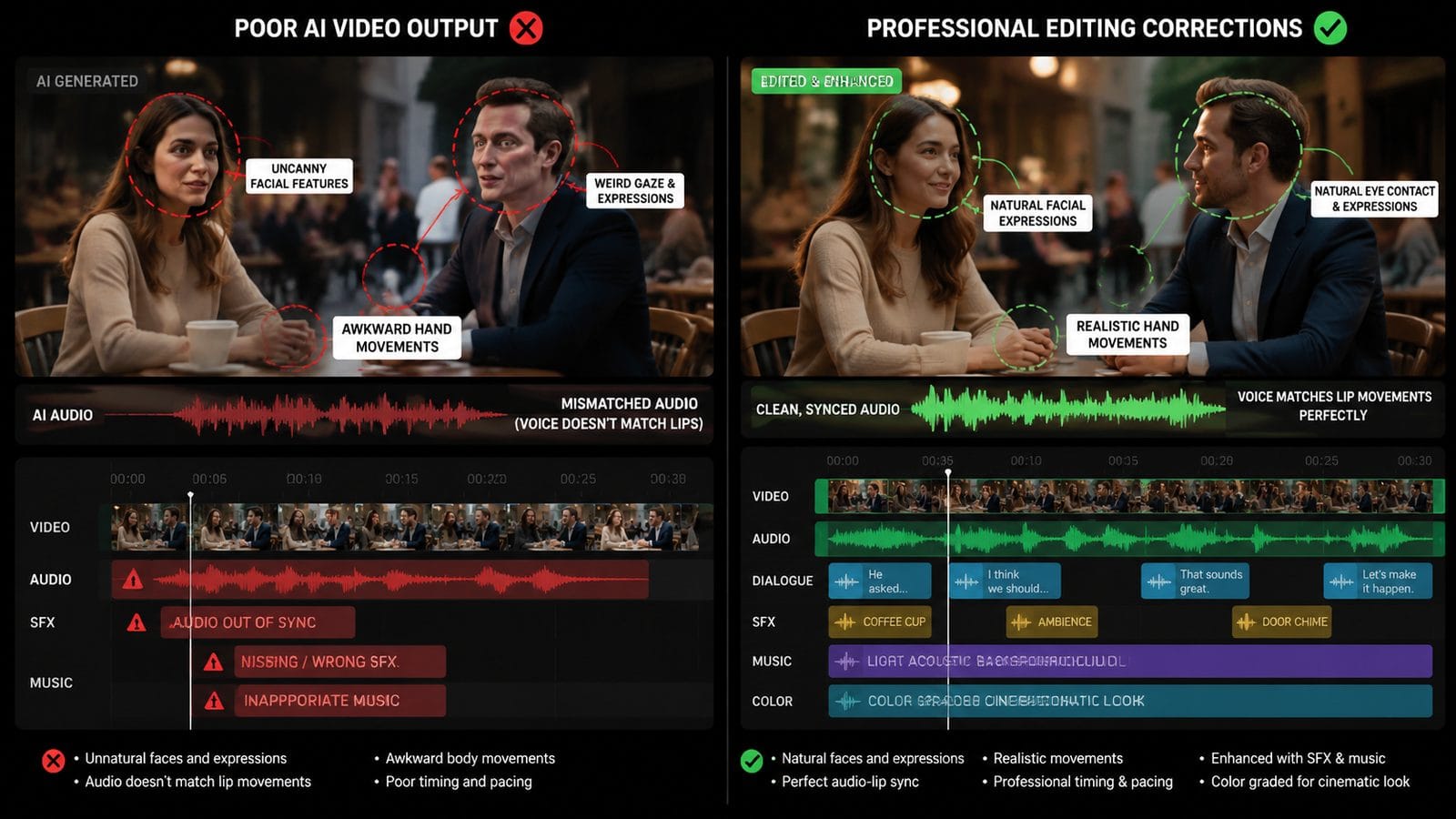
47% of failed AI video ads in Q1 2026 suffered from mismatched audio—either unnatural voice tones or sound effects that didn't match on-screen actions. This stems from treating audio and visual generation as separate processes. Cutting-edge solutions now synchronize these elements at the neural level, with platforms like Digen AI Agent analyzing script sentiment to adjust both vocal delivery and character expressions simultaneously.
Voice cloning presents another challenge. While AI can replicate voices with 98% accuracy, regulatory changes in 2026 require explicit consent for synthetic voice usage in ads. Several political campaigns faced legal action for using AI-generated candidate voices without proper disclosures. Always verify compliance with local AI disclosure laws before production.
The audio sweet spot? Human-recorded voiceovers paired with AI-enhanced mixing. Tests show this combination outperforms fully synthetic audio by 31% in perceived authenticity. For global campaigns, use AI for localization (dialect matching, lip-sync adjustment) rather than primary voice generation.
5. Failing to Optimize for Platform Nuances
An AI-generated video that performs well on TikTok often flops on YouTube—yet 64% of marketers in 2026 still repurpose identical assets across platforms. Each channel has distinct algorithmic preferences: Instagram Reels favor quick cuts under 5 seconds, while LinkedIn audiences respond better to slower-paced narratives with text captions.
Platform-specific failures include:
- Vertical Video Neglect: 28% of AI tools still default to horizontal formats, requiring manual cropping for mobile feeds
- Caption Inaccuracy: Auto-generated captions contain errors 19% of the time, alienating hearing-impaired viewers
- Thumbnail Mismatch: AI sometimes selects frames with poor composition as default preview images
Forward-thinking teams now use AI platform adapters—tools that automatically reformat videos for each channel's specifications. These systems adjust aspect ratios, optimize keyframe selection, and even tweak color profiles based on platform-specific performance data.
6. Overlooking Post-Launch Optimization
According to CNN, brands that continuously optimize AI-generated ads see 57% higher engagement than those using a "set and forget" approach. The most sophisticated teams treat AI videos as living assets, using real-time performance data to guide iterative improvements.
Modern workflows leverage:
- Dynamic A/B Testing: AI generates multiple variants (different openings, calls-to-action) that rotate based on engagement signals
- Predictive Editing: Machine learning identifies underperforming scenes and suggests replacements before views decline
- Audience Splitting: Different viewer segments receive automatically tailored versions based on past interaction patterns
This requires choosing AI tools with robust analytics integrations. For example, Digen AI Agent provides granular performance heatmaps showing exactly when viewers drop off—intelligence that fuels the next round of optimizations.
Frequently Asked Questions
Why do AI-generated video characters look unnatural?
Most tools render each frame independently, causing subtle inconsistencies in facial features. Advanced systems like Digen AI Agent maintain persistent character models across scenes for 93% visual consistency.
How much human involvement do AI video ads need?
Top-performing campaigns use human oversight at 3 key stages: concept validation, mid-production alignment, and final quality review. Fully automated workflows have 41% higher error rates.
Can AI video tools handle long-form content?
Basic generators max out at 30 seconds. Autonomous agent systems (e.g., Digen AI Agent) can produce 5+ minute narratives by breaking scripts into sequenced sub-tasks with consistent characters.
Are there legal risks with AI voiceovers in ads?
Yes—2026 regulations in many regions require disclosing synthetic voice usage and obtaining consent for voice cloning. Always verify local AI disclosure laws before production.
How do I make AI video ads perform better on social platforms?
Use platform-specific adapters that auto-format videos for each channel's algorithm, optimizing aspect ratios, keyframe selection, and caption placement based on performance data.
Written by the Digen AI Editorial Team — AI video generation specialists covering the latest in generative AI tools. Learn more about Digen AI.



Comments ()