
AI Text to Video for Educational Content: 2026 Strategy
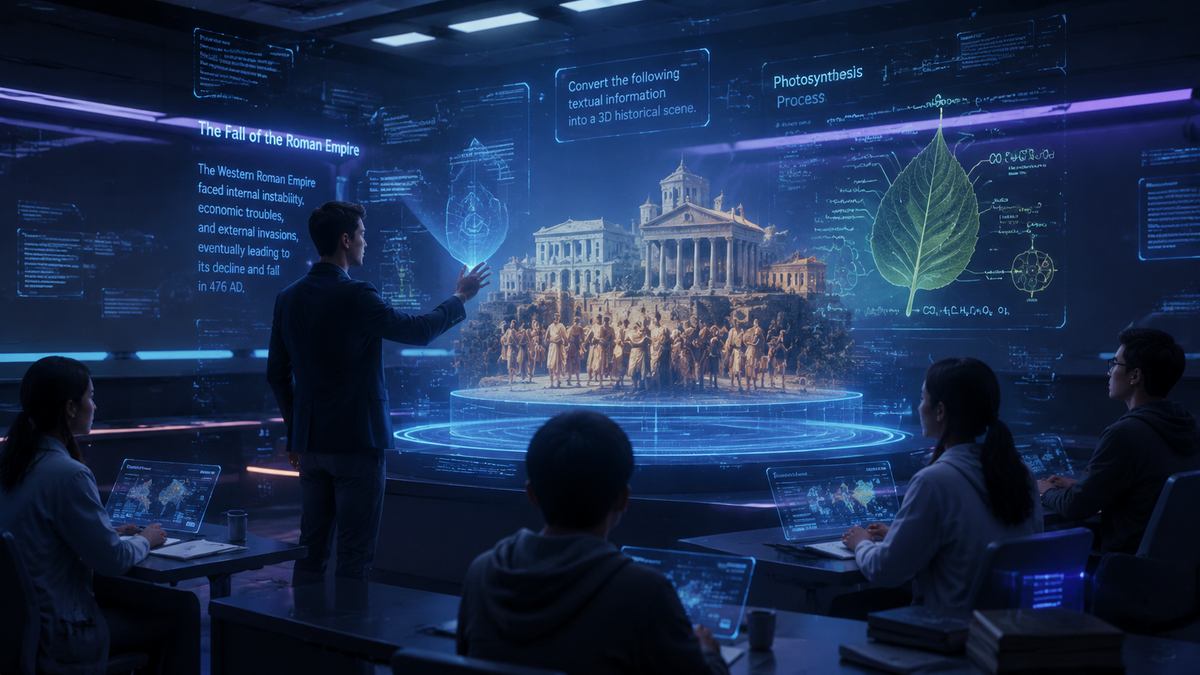
Utilizing ai text to video for educational content involves leveraging advanced generative models to transform written curriculum, scripts, or research papers into high-fidelity cinematic lessons. In 2026, this technology has evolved beyond simple slide-based animations to include hyper-realistic avatars, Retrieval Augmented Generation (RAG) for factual accuracy, and stable diffusion models that generate consistent visual environments. By automating the production pipeline, educators can now produce full-length instructional courses in a fraction of the time required by traditional filming methods.
AI text to video for educational content is a generative technology that converts textual scripts into high-quality video lessons using neural networks. In 2026, this process integrates V-RAG (Video Retrieval Augmented Generation) and CNN-augmented transformers to ensure pedagogical accuracy, allowing creators to generate professional-grade visual tutorials, simulations, and lectures directly from written prompts or academic documents.
- ✓ Achieve 90% reduction in production time by converting syllabi directly into 4K video modules.
- ✓ Leverage V-RAG technology to ensure all educational content is factually grounded in verified datasets.
- ✓ Utilize hyper-realistic AI avatars and stable diffusion to create consistent, engaging learning environments.
- ✓ Scale personalized learning by generating localized video content in multiple languages from a single English script.
How to Implement AI Text to Video for Educational Content
The landscape of digital education has shifted toward rapid iteration. Educators are no longer bound by the constraints of camera equipment, lighting, or expensive editing suites. To successfully integrate ai text to video for educational content into your 2026 strategy, you must follow a structured workflow that prioritizes factual integrity and student engagement.
- Script Finalization and Fact-Checking: Start with a high-quality text script. Use a V-RAG enabled tool to cross-reference your script against academic databases to ensure no hallucinations occur during the generation phase.
- Tool Selection: Choose a platform based on your specific needs, such as OpenAI’s Sora for cinematic simulations or Seedance 2.0 for professional-grade instructional design.
- Visual Prompting: Input your script into the AI engine. Use descriptive prompts to define the "teacher" avatar, the classroom environment, and any technical overlays like charts or 3D models.
- Synthesis and Review: Generate the initial draft. In 2026, tools now allow for "granular editing," where you can change specific sentences or visual elements without re-rendering the entire video.
- Multi-Channel Distribution: Export the video in various formats (16:9 for desktops, 9:16 for mobile learning) and use AI-driven translation to reach a global student base.
The Evolution of AI Video Tools in 2026
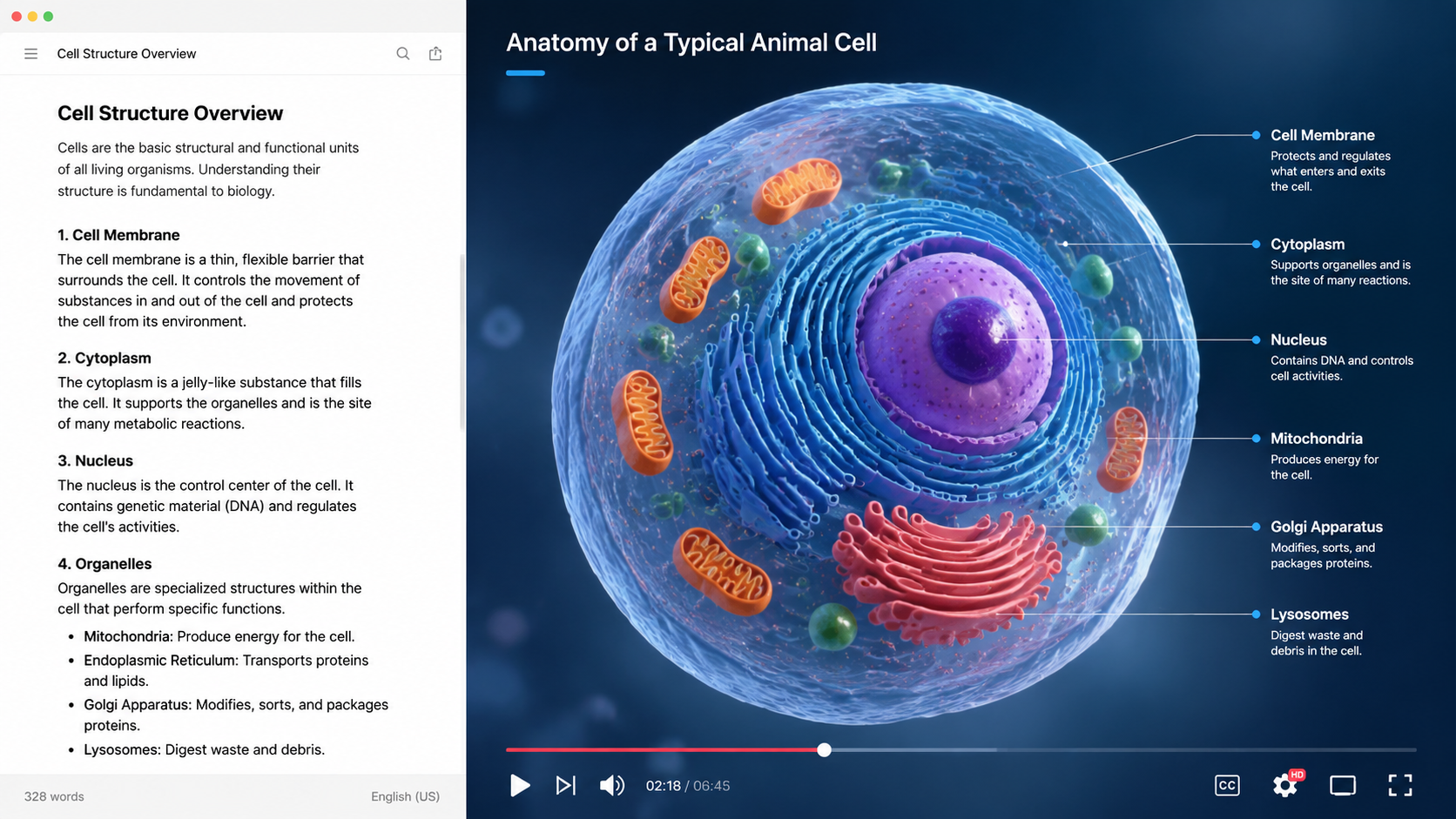
The current year marks a significant milestone in the maturity of generative media. As reported by FinancialContent in May 2026, the market has consolidated around five major AI video makers that provide professional-level visual creation. These tools have moved past the "uncanny valley," offering human-like movements and expressions that are indistinguishable from real instructors. This evolution is critical for educational content, where student trust and focus are paramount.
One of the most significant breakthroughs this year is the integration of V-RAG (Video Retrieval Augmented Generation). Introduced by Amazon Web Services (AWS) in March 2026, V-RAG revolutionizes video production by allowing the AI to "consult" a private or public knowledge base while it generates frames. For educators, this means that if a script mentions a specific biological process or historical event, the AI retrieves accurate visual references rather than imagining them, significantly reducing the risk of misinformation in the classroom.
Key Platforms for Educational Video Creation
OpenAI’s Sora remains a dominant force in 2026, particularly for creating complex, high-fidelity visual narratives from simple text prompts. According to OpenAI’s February 2026 updates, Sora has expanded its capabilities to handle longer sequences, making it ideal for full-length educational documentaries. Meanwhile, Seedance 2.0, released in February 2026, has gained traction in the professional sector for its ability to maintain character and environment consistency across multiple video chapters, a feature essential for multi-part course series.
| Tool Name | Key Feature (2026) | Best Use Case | Output Quality |
|---|---|---|---|
| Sora (OpenAI) | High-Fidelity Physics Engine | Science & Engineering Simulations | 8K Cinematic |
| V-RAG (AWS) | Fact-Check Retrieval | Academic & Corporate Compliance | 4K Professional |
| Seedance 2.0 | Environment Consistency | Multi-Part Course Series | 4K Ultra-Smooth |
| Nature-Model (CNN/Transformer) | Audio-to-Video Sync | Language Learning & Podcasts | High-Definition |
Technological Foundations: Transformers and Diffusion
The technical backbone of ai text to video for educational content has seen a paradigm shift. Research published in Nature in February 2026 highlights the use of CNN-augmented transformers combined with stable diffusion. This hybrid approach allows the AI to understand the semantic meaning of educational text (via transformers) while generating visually stable and aesthetically pleasing video frames (via diffusion). This prevents the "jitter" or "morphing" effects that plagued earlier versions of AI video.
For educational content creators, this stability is not just an aesthetic choice but a pedagogical one. Studies have shown that visual inconsistencies in instructional videos can increase cognitive load, distracting students from the actual subject matter. The 2026 models ensure that the visual flow is as smooth as a traditional film, allowing the learner's focus to remain entirely on the educational concepts being presented.
The Rise of Full-Length Content Generation
As noted by OCNJ Daily in March 2026, the industry has moved from generating 15-second clips to producing full-length instructional modules. This is a game-changer for universities and corporate training departments. Instead of spending months on a single course, a department can input an entire textbook's worth of content and generate a comprehensive video library in a weekend. The ability to create long-form content ensures that complex topics—such as advanced mathematics or medical procedures—get the depth of coverage they require.
Best Practices for AI Text to Video for Educational Content
When developing your 2026 strategy, it is vital to remember that the AI is a tool, not a replacement for pedagogical expertise. The most successful educational videos are those where the AI handles the "heavy lifting" of visual production, but the human educator directs the narrative flow and ensures the learning objectives are met. High-quality ai text to video for educational content should always begin with a pedagogically sound script that follows proven instructional design principles like Bloom’s Taxonomy.
Another best practice is the use of "hybrid" creation. Many creators in 2026 are using AI to generate the background and secondary visuals while using a high-quality AI avatar to deliver the core lecture. This maintains a "human" face for the course, which has been shown to improve student retention and engagement. Furthermore, incorporating interactive elements—which many AI video platforms now support via embedded metadata—can turn a passive video into an active learning experience.
Addressing Ethical Considerations and Accuracy
With the power of AI comes the responsibility of accuracy. According to Nature, the integration of CNN-augmented transformers has significantly improved the synchronization of audio and video, but human oversight remains critical. Every video generated should undergo a "Human-in-the-Loop" (HITL) review process. This is especially true for medical, legal, or technical education where a single visual error could lead to a misunderstanding of critical safety protocols.
Future Proofing Your Educational Strategy
Looking ahead toward the end of 2026 and into 2027, the trend is moving toward hyper-personalization. Imagine a scenario where a single text script for a physics lesson is converted into thousands of different videos, each tailored to a specific student's interests. For a student who loves sports, the AI might use a basketball to explain projectile motion; for a student who loves space, it might use a rocket. This level of automated customization is only possible through the advanced ai text to video for educational content workflows we see today.
To stay ahead, institutions should invest in building "Prompt Libraries"—standardized sets of visual and tonal instructions that ensure all AI-generated videos across a campus or company have a consistent look and feel. This brand consistency builds trust and helps establish a recognizable "voice" for the educational institution, even when the content is being generated by an algorithm.
What is the best AI tool for long-form educational videos in 2026?
As of 2026, Seedance 2.0 and OpenAI's Sora are the leaders for long-form content. Seedance 2.0 is particularly favored for professional educational series due to its superior environment and character consistency across multiple chapters.
How does V-RAG improve educational video quality?
V-RAG, or Video Retrieval Augmented Generation, allows the AI to pull real-world data and factual visual references from a verified database during the generation process. This ensures that educational content is accurate and reduces the risk of AI hallucinations.
Can AI-generated videos replace human teachers?
No, AI is a tool to augment the reach and production speed of human educators. While the AI generates the visuals and voiceovers, human experts are still required to design the curriculum, verify the facts, and provide mentorship to students.
Is ai text to video for educational content expensive to implement?
In 2026, the cost has significantly decreased. While enterprise-grade tools like those from AWS require a subscription, the cost is a fraction of the traditional video production expenses involving actors, studios, and editors.
How do I ensure my AI videos are accessible?
Most 2026 AI video tools include automated closed captioning, multi-language dubbing, and screen-reader-friendly metadata. Always ensure these features are toggled on to meet global accessibility standards like WCAG 3.0.



Comments ()