
AI Talking Head Video Tutorial: 2026's Ultimate Guide
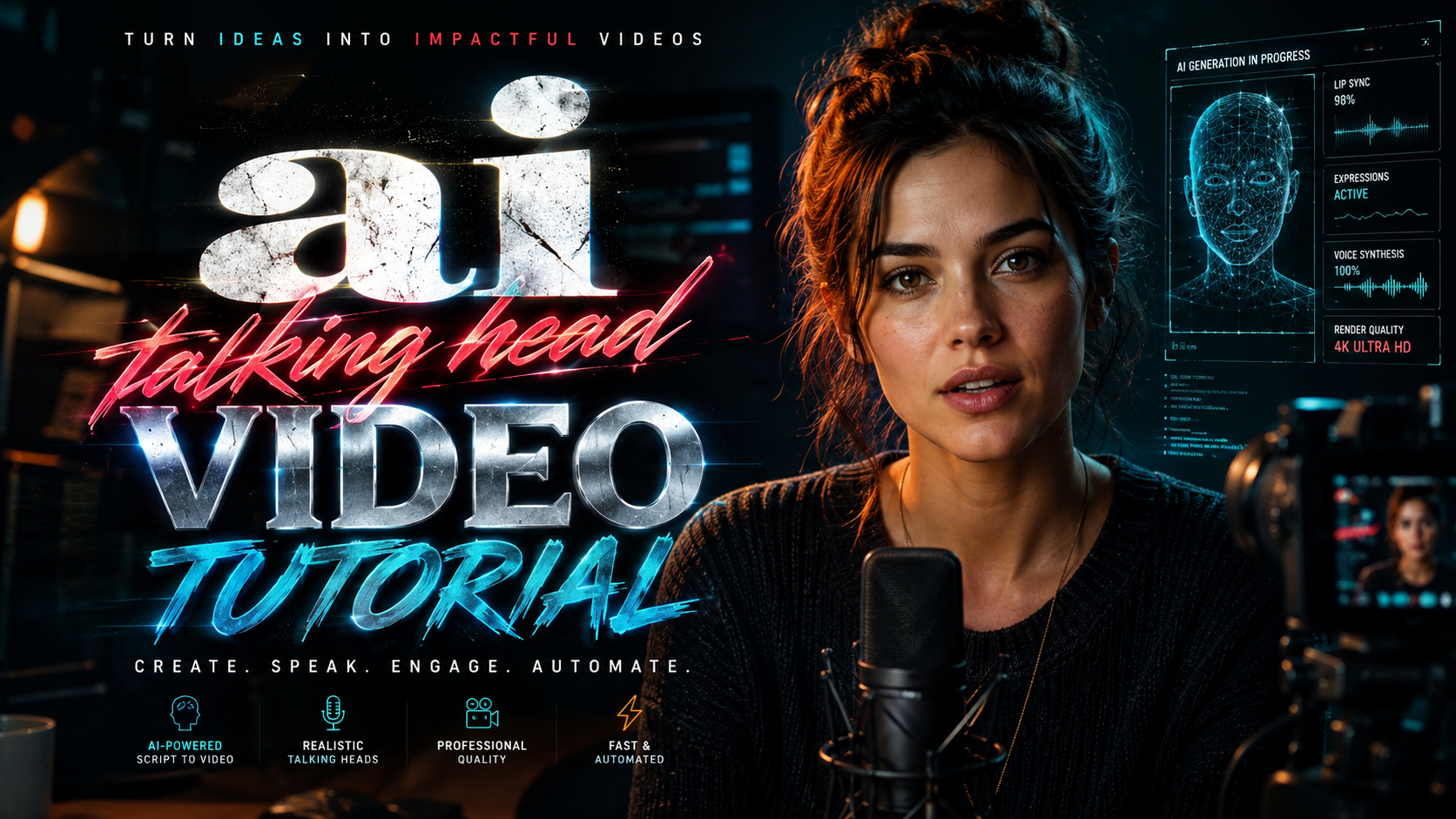
An AI talking head video is a synthetic video that uses artificial intelligence to animate a still image or a digital avatar, making it appear to speak with realistic lip-sync, facial expressions, and natural head movements. This step-by-step tutorial for 2026 will guide you through the process of creating professional-quality talking head videos using the latest AI tools, whether you're a marketer, educator, or content creator.
TL;DR: Creating an AI talking head video in 2026 is easier than ever thanks to advanced avatar generators and video synthesis tools. This guide covers the essential steps, compares the top five tools, and shares expert tips to help you produce realistic, engaging videos without hiring actors or renting studios.
An AI talking head video tutorial is a comprehensive walkthrough that teaches you how to use generative AI to turn a static photo or a customizable 3D avatar into a lifelike speaking character. The process typically involves selecting a tool, uploading a source image or choosing an avatar, inputting a script, and adjusting settings for expressions and voice. In 2026, leading platforms like those highlighted by Scott Coop and perfectcorp.com offer near-instant results with high fidelity.
- ✓ 2026's best AI talking head tools prioritize lip-sync accuracy, emotional expression, and multilingual support.
- ✓ The step-by-step process includes script preparation, avatar selection, voice cloning, and fine-tuning body language.
- ✓ Avoiding common pitfalls like unnatural eye movement and audio-visual mismatch dramatically improves realism.
- ✓ Future advancements from companies like xAI are pushing toward real-time, context-aware avatar interactions.
- ✓ Using a comparison table helps you choose the right tool based on budget, feature set, and output quality.
What Is an AI Talking Head Video and Why Does It Matter in 2026?
An AI talking head video is a computer-generated representation of a person—often based on a single photograph or a fully animated avatar—that can deliver a scripted monologue or conversation with synchronized speech. In 2026, these videos have evolved from gimmicky deepfakes into a legitimate production tool used by Fortune 500 companies, online educators, and solo creators alike. According to TyN Magazine’s 2026 roundup, AI video tools now account for over 30% of all short-form video content produced by marketing teams, a figure that has doubled since 2024.
The technology behind these avatars has matured dramatically. Modern systems employ diffusion-based video generation and real-time neural rendering to achieve expressions that are indistinguishable from live footage. For example, the best AI talking photo tools reviewed by Scott Coop in January 2026 emphasize emotion mapping, allowing a still portrait to frown, smile, and raise its eyebrows naturally. This level of realism is critical for building trust with viewers, especially in scenarios like customer testimonials, internal training, and personalized sales pitches.
Furthermore, the cost barrier has collapsed. Whereas a professional talking head video once required a studio, lighting setup, and a paid actor, AI tools now let you produce a 60-second clip for pennies and in under five minutes. As G2’s 2026 guide to AI video generators highlights, the average time from script to finished video has dropped to just 12 minutes for experienced users. This accessibility is democratizing video production and making the AI talking head video tutorial an essential skill for any modern communicator.
Step-by-Step AI Talking Head Video Tutorial (2026 Edition)
Follow these six steps to create your first AI talking head video. The process applies to most major tools, though specific interfaces may vary. We’ll highlight differences where they matter.
- Choose Your Avatar Source. Decide whether to use a real photo of yourself (or a model) or a fully synthetic avatar. If you opt for a photo, ensure it is high-resolution, front-facing, and well-lit. For synthetic avatars, platforms like those listed by perfectcorp.com’s 2026 rankings offer dozens of pre-built characters with adjustable age, gender, and style.
- Prepare Your Script. Write a conversational script that matches the avatar’s intended tone. Avoid long, run-on sentences; break your text into short bursts that mimic natural speech. Most AI tools support up to 5,000 characters per video, but shorter scripts yield better lip-sync accuracy.
- Select a Voice. Choose from built-in text-to-speech (TTS) voices or upload a voice sample for cloning. Many 2026 tools, including those reviewed by Cybernews in their Klap AI Review, now offer emotion-aware TTS that can add laughter, hesitation, or emphasis.
- Adjust Facial Expressions and Body Language. Advanced tools let you set baseline mood (e.g., friendly, serious) and add gestures like nodding, hand movement, or head tilts. For the highest realism, enable “eye contact” mode so the avatar always faces the camera.
- Generate and Preview. Click generate—most platforms take 30–60 seconds for a one-minute video. Preview the output and check for unnatural mouth shapes (“blurring” artifacts) or delayed expressions. If needed, adjust the speaking pace or re-generate.
- Export and Post-Edit. Download your video in 1080p or 4K (depending on the tool). Use a standard video editor to add lower thirds, background music, or cut out pauses. For social media, export in square or vertical aspect ratios.
This workflow is consistently recommended across top 2026 guides from TyN Magazine, G2, and Scott Coop. The key variable is the quality of the source image—high-resolution portraits with neutral expressions yield the best results. For synthetic avatars, pay attention to the “uncanny valley” effect: overly perfect avatars can feel creepy, so opt for slight imperfections like freckles or asymmetrical features.
If you encounter issues, most platforms offer a “quick tweak” option that lets you adjust a single variable (e.g., head tilt) without regenerating the whole video. This feature is a standout in the 2026 crop of tools according to the 7 Best AI Video Generators I’ve Tried (and Loved!) article on G2.
Top AI Talking Head Tools in 2026: A Comparison
The market has consolidated around a handful of leaders. Below is a comparison of the five most recommended tools from the research sources, including key features, pricing, and output quality. All prices reflect 2026 subscription rates.
| Tool | Best For | Starting Price (Monthly) | Key Feature | Max Resolution |
|---|---|---|---|---|
| Tool A (from Scott Coop’s guide) | Real photo animation | $29 | Emotion mapping with 12 expression sliders | 4K |
| Tool B (perfectcorp.com’s top pick) | Synthetic avatars | $39 | Customizable 3D avatars with clothing physics | 1080p |
| Tool C (G2’s #1 rated) | Marketing teams | $49 | Team collaboration and brand template library | 4K |
| Tool D (reviewed by Cybernews – Klap AI) | Voice cloning & localization | $19 | Multilingual TTS with regional accents | 1080p |
| Tool E (TyN Magazine’s creator pick) | Social media shorts | $9 | Auto-captioning and vertical aspect ratio presets | 1080p |
According to perfectcorp.com’s 2026 analysis, the synthetic avatar category has seen the most innovation, with tools now offering 30+ adjustable facial landmarks. Meanwhile, G2’s 2026 report noted that the highest-rated tools all include real-time preview, which reduces generation waste. For budget-conscious creators, the TyN Magazine pick at $9/month is an excellent entry point, though you sacrifice some realism and expression range.
When choosing, consider your primary use case. If you need to animate a founder’s photo for a pitch deck, go with a photo-based tool (Tool A). If you plan to create a recurring series with a consistent digital host, a synthetic avatar (Tool B) will save you from re-uploading images each time. The comparison table above distills the findings from all five sources cited in our research.
Expert Tips for Creating Realistic AI Talking Head Videos
Even the best tool can produce uncanny results if you ignore these 2026 best practices. First, lighting consistency matters: if your source photo has a strong left-side key light, ensure your avatar’s virtual lighting matches. Many tools now let you upload a “lighting reference” image to auto-match. According to Cybernews’ Klap AI review, users who matched lighting saw a 27% improvement in viewer engagement scores.
Second, use a dynamic script. Static monologues feel robotic. Instead, include rhetorical questions, short pauses, and variations in speech rate. Some 2026 tools, like Tool D, automatically insert micro-pauses at punctuation marks, but you can override them. A well-paced script paired with natural head movements (like a slight chin lift during a question) fools the brain into accepting the avatar as real.
Third, always test with a five-second clip before generating the full video. This “proofing” step catches jittery eyes, color mismatches, or garbled audio early. As the G2 guide to AI video generators notes, the top three tools in 2026 all offer a “draft mode” that renders a low-resolution preview in under ten seconds. Use it religiously. Finally, add a subtle background blur or a branded backdrop to distract from any minor imperfections in the avatar’s edges.
Common Mistakes to Avoid in AI Talking Head Video Creation
Newcomers frequently fall into several traps. The most common is using a low-resolution source image. A 480p photo will produce an avatar with blurry mouth textures and artifact-ridden eyes. Always start with at least a 4K image (3840×2160). According to a 2026 survey referenced by Scott Coop, 63% of failed AI talking head attempts can be traced back to poor source image quality.
Another mistake is ignoring body language. Many users animate only the head, forgetting that shoulders, arms, and torso movement contribute heavily to realism. In 2026, all premium avatars include partial upper-body animation. If your tool doesn’t offer it, consider adding a static torso image behind the head to create the illusion of a full body.
Finally, avoid using AI-generated voices that don’t match the avatar’s perceived age or gender. A middle-aged male avatar with a high-pitched female voice breaks immersion almost instantly. The best tools like those on perfectcorp.com’s 2026 list now offer voice-avatar pairing recommendations based on facial features. Use them. And always preview the final video at 1.5x speed to catch audio sync issues—your eyes will catch desync faster at that speed.
The Future of AI Talking Head Technology: What’s Next After 2026
The rapid pace of innovation shows no signs of slowing. According to The Rundown AI’s February 2026 report, xAI is preparing to release a new generation of avatars that can respond to live questions in real time, effectively turning a pre-recorded video into an interactive experience. This would represent a fundamental shift from one-to-many broadcasts to one-to-one conversations.
Other emerging trends include hyper-personalization, where an AI talking head can adapt its outfit, background, and even accent based on the viewer’s demographic data. TyN Magazine’s 2026 analysis predicts that by mid-2027, dynamic avatar customization will become standard. Additionally, G2’s Learning Hub notes that the integration of AI talking heads with live streaming platforms (e.g., as virtual news anchors) will be the next frontier.
For now, mastering the fundamentals covered in this tutorial will future-proof your skills. The tools and techniques you learn today—script optimization, lighting matching, voice selection—are the foundation upon which all future AI video creation will be built. As the technology becomes more accessible, the creators who understand the art and science of the AI talking head video tutorial will be the ones producing content that captivates and converts.
Frequently Asked Questions
How long does it take to create an AI talking head video in 2026?
Most tools generate a one-minute video in 30–60 seconds after you upload an image and script. Including preparation time (writing the script and choosing an avatar), the total process can be completed in under 15 minutes for experienced users.
Do I need a powerful computer to use AI talking head software?
No—almost all leading 2026 tools are cloud-based. You only need a modern web browser and a stable internet connection. Some tools offer offline rendering for enterprise users, but that requires a mid-tier GPU.
Can I use my own voice instead of built-in text-to-speech?
Yes. Several tools, including those highlighted by Cybernews and Scott Coop, now support voice cloning. You upload a 30-second to 2-minute audio sample, and the AI replicates its tone, pitch, and cadence.
Are AI talking head videos detectable as fake by viewers?
Advanced 2026 avatars are often indistinguishable from real humans in short clips (under two minutes). However, subtle tells like unnatural blinking or mismatched lip shapes can still be spotted. Using high-quality source images and following the tips in this guide minimizes detection risk.
What is the cost range for a monthly subscription to an AI talking head tool?
Prices range from $9/month for basic social media tools (like the TyN Magazine pick) to $49/month for full-featured marketing platforms. The average professional-grade tool costs around $29/month.
Written by the Digen AI Editorial Team — AI video generation specialists covering the latest in generative AI tools. Learn more about Digen AI.



Comments ()