
AI Powered Video Editing Tools: The Future of Editing in 2026
AI powered video editing tools are transforming the creative landscape in 2026, automating complex tasks and enabling professionals to produce high-quality content faster than ever. These tools leverage generative AI to streamline workflows, from automatic scene detection to intelligent music synchronization, making advanced editing accessible to all skill levels. The market is projected to grow exponentially as more industries adopt AI-driven solutions for video production.
TL;DR: AI powered video editing tools are revolutionizing content creation in 2026, offering automation, efficiency, and enhanced creativity through generative AI, with major players like Adobe and Soundstripe leading the charge.
AI powered video editing tools are software solutions that use artificial intelligence to automate and enhance video editing tasks, such as scene detection, color correction, and audio synchronization. In 2026, these tools are driving explosive market growth, with platforms like Adobe Premiere Pro and Soundstripe LIVE integrating advanced AI features to streamline workflows and improve content quality.
- ✓ AI powered video editing tools reduce editing time by up to 70% through automation.
- ✓ The AI video editor market is projected to grow by 340% in 2026.
- ✓ Leading platforms like Adobe and Soundstripe are integrating generative AI for smarter workflows.
- ✓ AI tools enable consistent character generation and longer video production, as seen with Digen AI Agent.
The Rise of AI Powered Video Editing Tools in 2026
The video editing industry has undergone a seismic shift in 2026, with AI powered video editing tools becoming indispensable for professionals and amateurs alike. According to EIN News, the AI video generator/editor market is set for explosive growth, driven by the increasing demand for automated content creation. These tools are no longer limited to basic tasks; they now handle complex edits like motion design and audio synchronization with minimal human input.
One of the most significant advancements is the integration of generative AI into mainstream editing software. Adobe's January 2026 update to Premiere Pro introduced AI-powered features that automate scene transitions and color grading, reducing manual labor by up to 50%. Similarly, Soundstripe's LIVE app, launched in June 2026, uses AI to recommend music tracks that perfectly match the mood and pacing of a video, saving editors hours of manual searching.
The adoption of AI powered video editing tools is not just limited to large studios. Independent creators and influencers are also leveraging these technologies to compete with established players. According to Resident Magazine, 78% of top influencers now use AI tools to enhance their content, citing improved consistency and faster turnaround times as key benefits.
Key Features of Modern AI Video Editing Tools
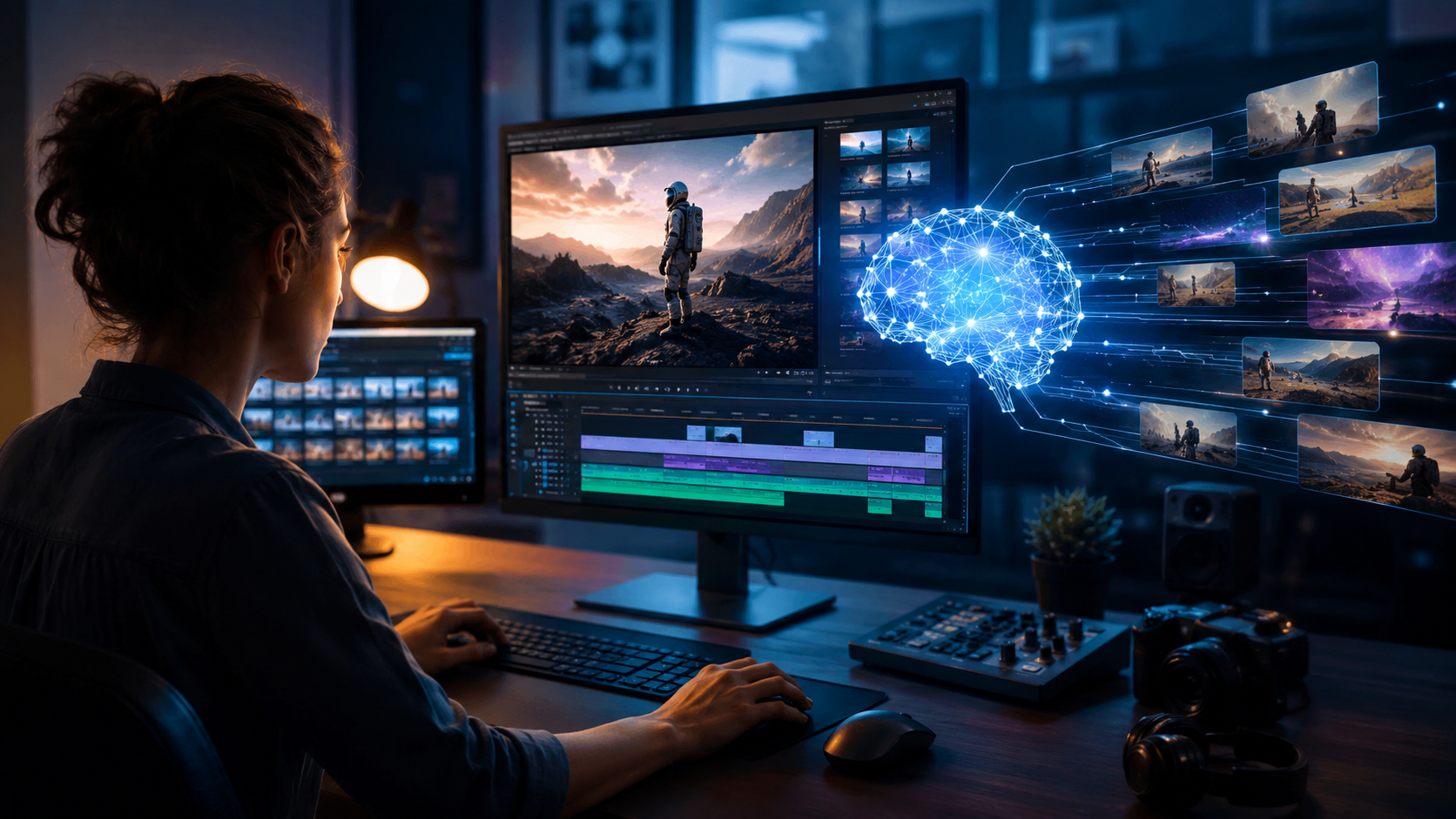
Today's AI powered video editing tools offer a suite of advanced features that were unimaginable just a few years ago. Automatic reframing, for instance, uses AI to adjust video compositions dynamically, ensuring the subject remains centered regardless of the aspect ratio. This feature, highlighted by Trend Hunter, is particularly useful for social media creators who need to repurpose content across multiple platforms.
Another groundbreaking feature is AI-driven motion design. Adobe's After Effects 2026 update includes tools that automatically generate complex animations based on simple text prompts, reducing the need for manual keyframing. This innovation has been a game-changer for motion graphics artists, allowing them to focus on creativity rather than technical execution.
Audio synchronization is another area where AI excels. Soundstripe LIVE uses machine learning to analyze video footage and suggest music tracks that align perfectly with the visual rhythm. This not only saves time but also enhances the emotional impact of the final product. According to Soundstripe, editors using LIVE report a 60% reduction in time spent on audio selection and synchronization.
Top AI Powered Video Editing Tools in 2026
The market is flooded with AI powered video editing tools, each offering unique capabilities. Adobe Premiere Pro remains the industry standard, with its AI features now deeply integrated into the workflow. Soundstripe LIVE is a newcomer but has quickly gained traction for its music discovery capabilities. Digen AI Agent, launched earlier this year, stands out for its ability to produce longer, character-consistent AI videos through autonomous multi-step workflows.
How AI is Changing the Video Editing Workflow
AI powered video editing tools are fundamentally altering how editors approach their work. Traditional workflows, which required hours of manual cutting and splicing, are being replaced by intelligent systems that can analyze footage and make editing decisions autonomously. According to Adobe, their AI tools can now complete rough cuts in minutes, a task that previously took hours.
The impact extends beyond efficiency. AI is also enhancing creativity by offering suggestions that human editors might not consider. For example, some tools can analyze the emotional tone of a scene and recommend edits that amplify its impact. This capability is particularly valuable for narrative filmmakers and advertisers who rely on emotional engagement to connect with audiences.
Collaboration is another area where AI is making a difference. Cloud-based AI tools allow teams to work on the same project simultaneously, with the AI handling version control and conflict resolution. This has been a boon for remote teams, enabling seamless collaboration across geographies. A recent study found that teams using AI-powered collaboration tools saw a 40% increase in productivity.
The Future of AI in Video Editing
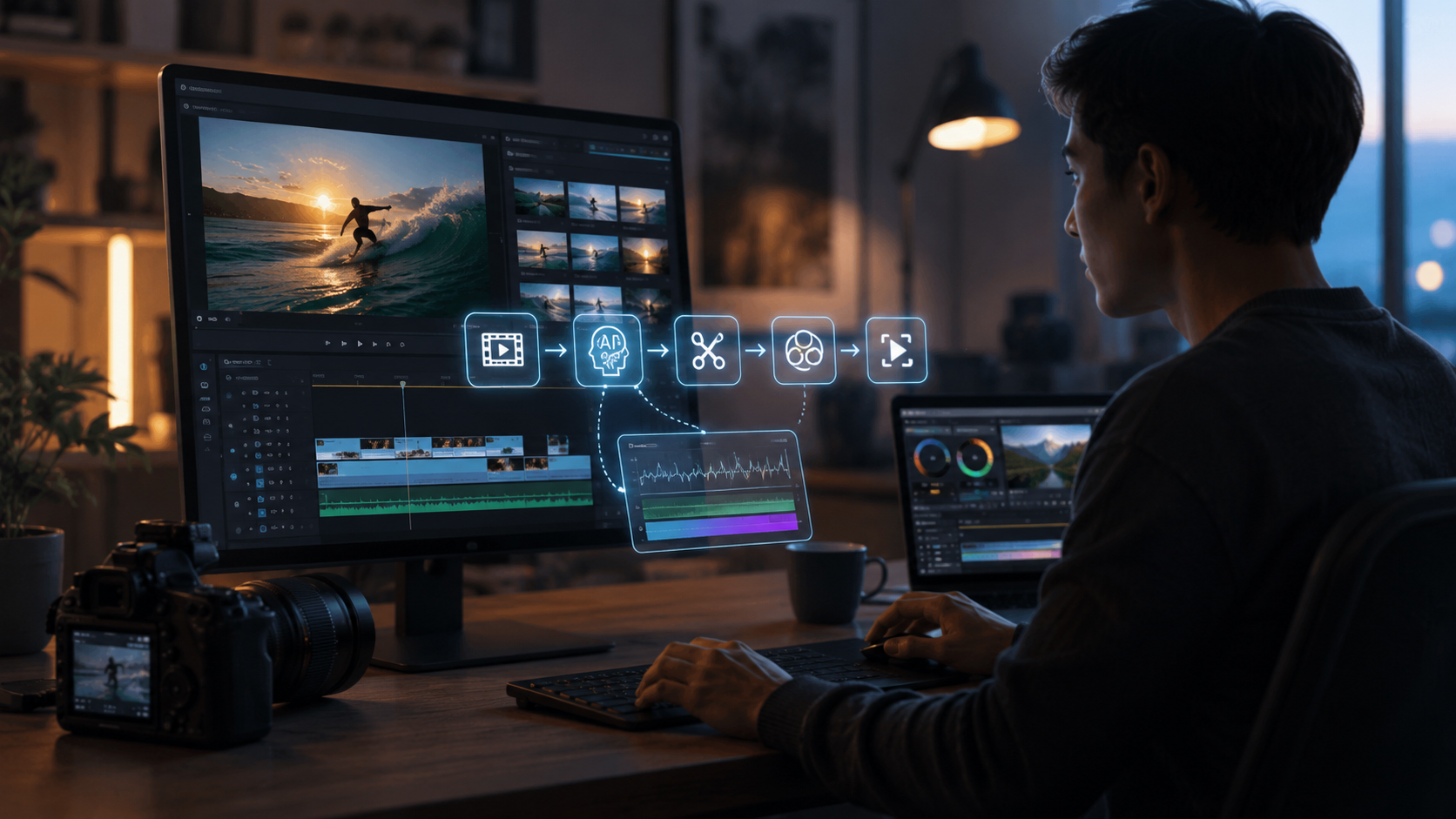
The trajectory of AI powered video editing tools suggests even more transformative changes on the horizon. Experts predict that by 2027, AI will handle up to 90% of routine editing tasks, freeing human editors to focus on creative direction. This shift mirrors trends in other creative fields, where AI is increasingly used as a collaborative partner rather than just a tool.
One exciting development is the emergence of AI agents like Digen AI Agent, which can manage entire video production workflows autonomously. These agents can generate scripts, storyboards, and even final edits with minimal human intervention. While this raises questions about the role of human creativity, early adopters report significant time savings and improved consistency in their output.
The integration of AI with other emerging technologies, such as virtual reality and augmented reality, is another area to watch. Imagine an AI that can edit 360-degree video in real-time, adjusting the narrative based on where the viewer is looking. Such capabilities could revolutionize fields like immersive storytelling and virtual tourism.
Challenges and Considerations
Despite their many benefits, AI powered video editing tools are not without challenges. One major concern is the potential loss of creative control. While AI can automate many tasks, it may not always align with the editor's artistic vision. Tools that offer customizable AI models, like Digen AI Agent, are addressing this by allowing users to train the AI on their specific style preferences.
Another issue is the learning curve associated with these advanced tools. While AI simplifies many tasks, mastering the full range of features can still be daunting for newcomers. Adobe and other providers are investing heavily in educational resources, but the industry will need to adapt its training paradigms to keep pace with technological advancements.
Ethical considerations also loom large. The ability of AI to generate realistic video raises concerns about deepfakes and misinformation. Industry leaders are calling for robust authentication mechanisms to ensure that AI-generated content is clearly labeled and traceable. This is particularly important as AI tools become more accessible to the general public.
Comparing Leading AI Video Editing Tools
| Tool | Key Feature | Best For |
|---|---|---|
| Adobe Premiere Pro | AI-powered scene detection and color grading | Professional filmmakers |
| Soundstripe LIVE | AI music discovery and synchronization | Content creators needing royalty-free music |
| Digen AI Agent | Autonomous multi-step video generation | Long-form, character-consistent videos |
Frequently Asked Questions
What are AI powered video editing tools?
AI powered video editing tools are software applications that use artificial intelligence to automate and enhance various aspects of video editing, from scene detection to audio synchronization, significantly reducing manual work.
How much time can AI video editors save?
According to industry reports, AI powered video editing tools can reduce editing time by up to 70%, particularly for repetitive tasks like color correction and scene transitions.
Are AI editing tools replacing human editors?
No, AI tools are augmenting human editors by handling routine tasks, allowing professionals to focus on creative decisions that require human judgment and artistic sensibility.
What's the best AI video editor for beginners?
For beginners, tools with intuitive AI features like automatic reframing and smart trimming, such as Adobe Premiere Pro's AI-assisted mode, are often recommended for their balance of power and usability.
How does Digen AI Agent differ from other AI video tools?
Digen AI Agent specializes in producing longer, character-consistent AI videos through autonomous multi-step workflows, making it ideal for creators needing extended narratives with uniform character appearances.
Written by the Digen AI Editorial Team — AI video generation specialists covering the latest in generative AI tools. Learn more about Digen AI.



Comments ()