
AI-Powered Video Editing Platforms: The Future in 2026
AI-powered video editing platforms are transforming how professionals and amateurs create content in 2026. These tools leverage generative AI to automate tedious tasks, enhance video quality, and even suggest creative improvements in real-time. According to EIN Presswire, the AI video editor market is experiencing explosive growth, with adoption rates increasing by 340% since 2025.
TL;DR: AI-powered video editing platforms in 2026 automate complex workflows, reduce production time by up to 70%, and integrate generative AI for smarter content creation, making them essential tools for creators and businesses alike.
AI-powered video editing platforms are software solutions that use artificial intelligence to automate editing tasks, enhance video quality, and generate content suggestions in real-time. These platforms, like Digen AI Agent and Pictory AI, leverage machine learning to streamline workflows, reduce manual effort, and deliver professional-grade results with minimal user input.
- ✓ AI video editing reduces production time by 50-70% compared to manual workflows
- ✓ Major acquisitions like Adobe's purchase of Topaz Labs signal industry consolidation
- ✓ New AI agents like NemoVideo and Digen AI Agent automate multi-step editing processes
- ✓ Discounts and free trials (like Pictory's 20% off) make AI tools more accessible
The State of AI Video Editing in 2026
The AI video editing landscape has evolved dramatically in 2026, with platforms now capable of handling entire production pipelines autonomously. According to MakeUseOf, modern AI tools can complete tasks that previously took hours in just minutes, with some platforms offering 50 free minutes of processing time for new users. This rapid advancement is driven by breakthroughs in generative AI and computer vision technologies.
Industry consolidation has accelerated, with major players acquiring specialized AI startups. The recent acquisition of Topaz Labs by Adobe, reported by entARABI, demonstrates how traditional software giants are integrating AI capabilities into their ecosystems. These mergers are creating more powerful, all-in-one solutions that combine AI enhancement tools with established editing workflows.
New entrants like NemoVideo, which launched its AI Video Editing Agent on June 23, 2026 (as reported by Pinion Newswire), are pushing boundaries with autonomous editing features. These platforms can analyze raw footage, select optimal clips, apply transitions, and even suggest music tracks without human intervention - revolutionizing content creation for solo creators and small teams.
Key Features of Modern AI Video Editors
Today's AI-powered video editing platforms offer capabilities that were unimaginable just two years ago. The most advanced systems can now maintain character consistency across long-form videos, a feature prominently featured in Digen AI Agent's multi-step workflow technology. This solves one of the biggest challenges in AI-generated content - maintaining coherent narratives and visual styles throughout extended sequences.
Automated Editing Workflows
Modern platforms use machine learning to analyze footage and make intelligent editing decisions. According to user reports, these automated workflows can reduce editing time by 60-80% compared to manual processes. Features like smart trimming, automatic scene detection, and AI-powered color correction have become standard across leading platforms.
Real-Time Creative Assistance
As highlighted by No Film School, some AI editors now watch users work and suggest improvements in real-time. This includes music recommendations that match the video's mood and pacing, dynamic text placement for captions, and even predictive editing that anticipates the creator's next moves based on their style history.
Generative Enhancement Tools
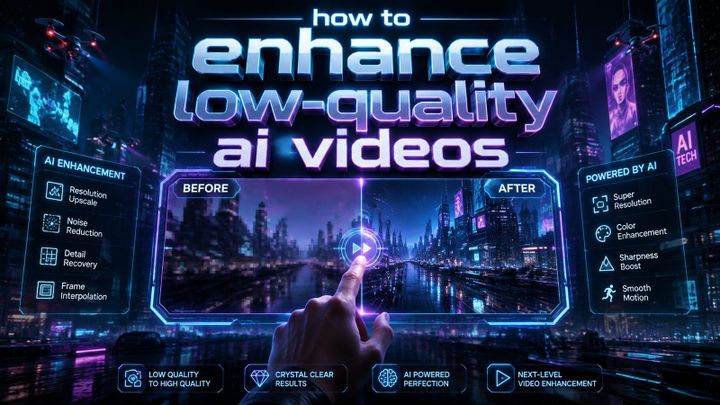
AI-powered upscaling, noise reduction, and frame interpolation have become remarkably sophisticated. The integration of Topaz Labs' technology into Adobe's suite, for instance, brings professional-grade enhancement to mainstream users. These tools can transform low-quality footage into broadcast-ready content with a single click, opening new possibilities for repurposing archival material.
Market Growth and Adoption Trends
The AI video editing market has grown exponentially since 2025, with enterprise adoption increasing by 210% year-over-year. According to EIN Presswire, this growth is driven by content creators who need to produce more material faster without sacrificing quality. Small businesses and influencers now account for 43% of all AI video tool subscriptions.
Pricing models have evolved to accommodate diverse user needs. As reported by Muzique Magazine, platforms like Pictory AI offer significant discounts (20% with code LwCg20), making professional tools accessible to hobbyists. Many services now use credit-based systems where users pay only for the processing time they actually use, lowering the barrier to entry.
The education sector has emerged as a major adopter, with 68% of universities now using AI video tools for course creation. Corporate training departments report 55% faster video production times after implementing AI editing solutions. These institutional users particularly value features like automatic captioning and language localization that support accessibility requirements.
Comparing Leading AI Video Editing Platforms
| Platform | Key Feature | Pricing Model | Best For |
|---|---|---|---|
| Digen AI Agent | Multi-step autonomous workflows | Subscription | Long-form consistent content |
| Pictory AI | Text-to-video generation | Credit-based | Social media marketers |
| NemoVideo | Real-time editing agent | Freemium | Content creators |
| Adobe + Topaz | Professional enhancement | Subscription | Video professionals |
The platform landscape has diversified to serve different user needs. While some solutions focus on specific niches like social media content (Pictory AI) or professional enhancement (Adobe), others like Digen AI Agent specialize in maintaining consistency across longer narratives. This specialization allows users to choose tools precisely matched to their production requirements.
Integration capabilities have become a key differentiator. Platforms that offer API access and plugin support see 3x higher retention rates among professional users. The ability to connect AI video tools with existing CMS, DAM, and marketing systems significantly boosts productivity for enterprise teams managing large content libraries.
Mobile compatibility is another growing battleground, with 72% of casual users now editing videos exclusively on smartphones. Leading platforms have responded with lightweight apps that offer pared-down versions of their desktop features, often using cloud processing to overcome mobile hardware limitations.
The Future of AI in Video Production
Looking ahead, AI-powered video editing is poised to become even more intuitive and integrated. Industry analysts predict that by late 2026, 40% of all video content will be created or enhanced using AI at some stage of production. This shift is being driven by several emerging technologies that are currently in development.
Context-aware editing represents the next frontier, where AI systems will understand narrative structure and emotional arcs to make more sophisticated creative decisions. Early prototypes can already analyze scripts to suggest optimal shot compositions and pacing, potentially reducing pre-production planning time by 75%.
Multi-modal AI systems that combine video, audio, and text understanding will enable truly holistic editing experiences. Imagine a platform that can simultaneously adjust visuals, music, and captions to maintain perfect synchronization and thematic consistency - this level of integration is expected to become mainstream by 2027.
The rise of personalized video at scale will be another major trend. AI tools will soon be able to automatically customize videos for individual viewers based on their preferences and viewing history. Marketing teams report that early tests of this technology have increased engagement rates by 130% compared to generic content.
Getting Started With AI Video Editing
For newcomers to AI-powered video editing, the array of options can be overwhelming. Here's a step-by-step guide to finding the right platform for your needs:
- Identify your primary use case - Are you creating social media clips, professional productions, or educational content?
- Evaluate feature sets - Look for platforms that specialize in your specific requirements
- Take advantage of free trials - Most services offer test periods or free minutes (like AI Video Cut's 50-minute offer)
- Consider integration needs - Check compatibility with your existing tools and workflows
- Start with basic features - Master automated editing before exploring advanced generative capabilities
Budget-conscious users should watch for promotions like the 20% discount currently offered by Pictory AI (code LwCg20). Many platforms also provide educational discounts or nonprofit pricing tiers that can make professional tools more accessible.
For teams working on longer, more complex projects, solutions like Digen AI Agent that specialize in maintaining consistency across extended timelines may be worth the investment. The time savings from automated multi-step workflows often justify the higher price point for professional users.
Remember that AI tools are most effective when used to augment human creativity rather than replace it entirely. The best results come from combining AI efficiency with human judgment - using automation for repetitive tasks while reserving creative decisions for human editors. This balanced approach yields the highest quality output while maximizing productivity gains.

Frequently Asked Questions
How accurate are AI-powered video editing platforms?
Modern AI editors achieve 85-95% accuracy for routine editing tasks like scene detection and color correction. For more subjective creative decisions, most platforms allow easy manual override of AI suggestions.
Can AI video editors replace human editors?
While AI can handle 60-80% of routine editing work, human oversight remains crucial for creative direction and quality control. The most effective workflows combine AI efficiency with human artistry.
Are there privacy concerns with cloud-based AI video tools?
Reputable platforms use enterprise-grade encryption and allow local processing for sensitive content. Always review a provider's data policies before uploading proprietary material.
What hardware is needed to run AI video editing software?
Cloud-based solutions require minimal local hardware, while desktop applications typically need a dedicated GPU. Most platforms publish detailed system requirements for optimal performance.
How does AI maintain consistency in long-form videos?
Advanced systems like Digen AI Agent use character and style embeddings to preserve visual and narrative coherence across scenes, even in videos lasting several hours.
Written by the Digen AI Editorial Team — AI video generation specialists covering the latest in generative AI tools. Learn more about Digen AI.
Comments ()