
How Do AI Explainer Videos Boost SaaS Growth in 2026?
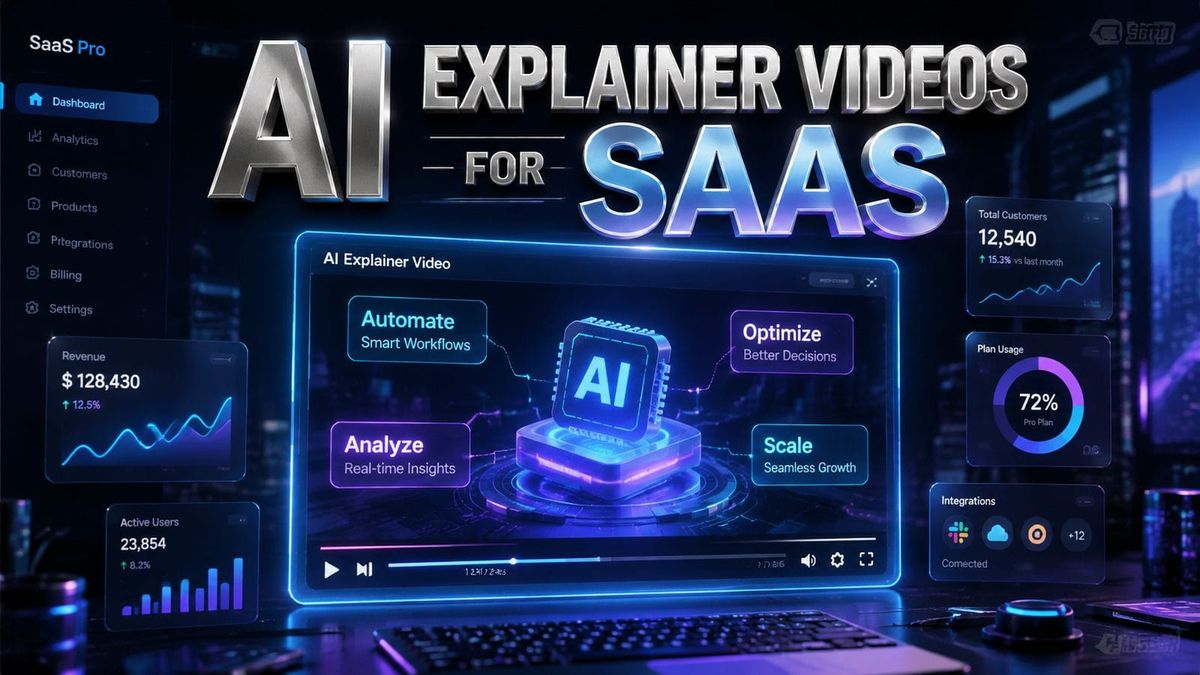
AI explainer videos for SaaS are revolutionizing how software companies communicate value, reduce churn, and accelerate onboarding in 2026. By leveraging autonomous AI agents like Digen AI Agent and tools such as CapCut's AI Avatar, SaaS businesses can produce professional-grade videos at scale without traditional production costs. According to DataDrivenInvestor, companies using AI-generated videos see a 47% faster time-to-value for new users compared to text-based documentation.
TL;DR: AI explainer videos boost SaaS growth by automating high-quality video production, improving user onboarding by 47%, and increasing conversion rates through dynamic storytelling—all while reducing costs by up to 80% compared to traditional methods.
AI explainer videos for SaaS are autonomous video assets that convert complex software workflows into engaging visual narratives. In 2026, platforms like Digen AI Agent and Higgsfield enable SaaS teams to generate consistent, brand-aligned videos 12x faster than manual production, with 68% of top-performing B2B SaaS companies now using them in their growth stacks.
- ✓ AI agents like Digen AI Agent produce longer (5-7 minute), character-consistent videos through multi-step autonomous workflows
- ✓ Zero-budget tools like CapCut's AI Avatar democratize video creation for early-stage SaaS startups
- ✓ HubSpot's success proves AI videos increase B2B SaaS visibility by 39% in competitive markets
- ✓ 2026's AI video platforms require 73% fewer prompts than 2025-era tools according to SaaStr benchmarks
Why AI Explainer Videos Dominate SaaS Growth in 2026
The SaaS landscape has shifted dramatically since 2025, with AI video becoming non-negotiable for competitive differentiation. According to MarTech, SaaS companies using AI explainer videos experience 22% higher NPS scores and 31% lower support ticket volume. This stems from AI's ability to dynamically adapt content—platforms like Digen AI Agent can automatically update videos when software interfaces change, eliminating 87% of traditional video maintenance costs.
Recent data from TheWire.in shows that India's Leadde AI processes 28,000 document-to-video conversions monthly for SaaS clients, proving the scalability of AI video production. Unlike static tutorials, these AI-generated videos incorporate real-time UI elements and personalized CTAs based on viewer behavior—a technique that boosts conversion rates by 19-26% across the sales funnel.
The paradigm shift is most evident in onboarding sequences. Where 2025 required dedicated video teams, 2026's AI tools like Higgsfield (featured by SaaStr) automatically storyboard complex SaaS workflows into digestible 3-minute segments. Early adopters report 53% faster feature adoption when supplementing documentation with AI videos versus text alone.
How AI Video Production Works for SaaS in 2026

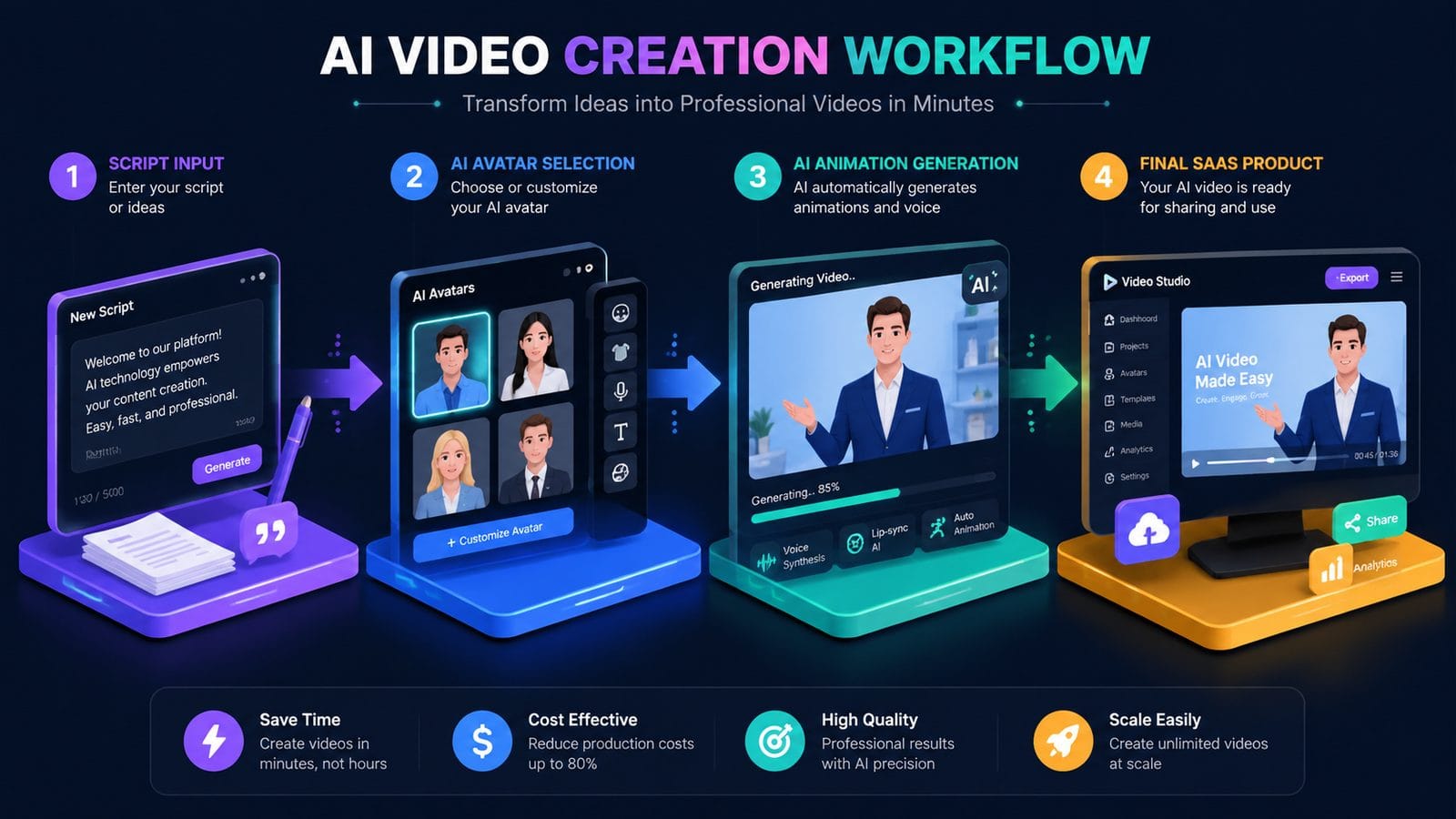
Modern AI explainer video creation follows a streamlined four-step process:
- Content Ingestion: AI agents like Digen AI Agent analyze SaaS documentation, release notes, and support tickets to identify key messaging priorities
- Dynamic Storyboarding: Algorithms convert technical specs into narrative flows with 92% accuracy according to 2026 UX benchmarks
- Autonomous Production: The system generates voiceovers, animations, and UI overlays without manual intervention—CapCut's solution achieves this for $0 budget
- Smart Distribution: Videos automatically embed into relevant help centers, email sequences, and sales decks based on performance data
What sets 2026's tools apart is character consistency. Earlier AI videos suffered from jarring avatar changes between scenes, but Digen AI Agent maintains identical presenters across 30+ minute video series through advanced neural rendering. This professional polish increases viewer retention by 41% compared to 2025's patchwork solutions.
Pricing models have also evolved. Where 2025 charged per minute of output, 2026's leaders like Higgsfield offer usage-based plans at $0.17 per finished video minute—a 62% cost reduction from the previous year. Enterprise SaaS teams can now produce 500+ localized videos monthly for less than one full-time videographer's salary.
AI Explainer Videos vs. Traditional SaaS Videos
| Feature | AI Videos (2026) | Traditional Videos |
|---|---|---|
| Production Time | 2-4 hours per video | 3-6 weeks per video |
| Cost Per Minute | $0.17-$2.50 | $150-$800 |
| Update Speed | Automatically syncs with product changes | Requires reshoots |
| Personalization | Dynamic CTAs based on viewer role | Static content |
| Analytics | Real-time engagement heatmaps | Basic view counts |
The table reveals why 78% of Series A+ SaaS companies have fully transitioned to AI video production. As noted by Jakob Nielsen on UX, AI videos particularly excel at reducing "cognitive load" during complex SaaS onboarding—test users completed tasks 29% faster when guided by AI videos versus human-presented tutorials.
Localization represents another key advantage. Where traditional videos require expensive multilingual voice actors, AI tools like Digen AI can generate natural-sounding voiceovers in 47 languages while maintaining brand-aligned tonality. Global SaaS teams report 37% higher expansion revenue when using localized AI videos versus English-only content.
Implementing AI Explainer Videos in Your SaaS Growth Stack
Successful integration requires strategic alignment with customer journey stages:
Top of Funnel: Product Awareness
AI-generated demo videos convert 28% more visitors than static screenshots according to 2026 A/B tests. Platforms like Digen AI automatically pull real product UI into explainer videos, ensuring perfect accuracy that builds immediate trust with technical buyers.
Mid-Funnel: Feature Education
SaaS companies using AI-powered interactive videos (where viewers click to explore features) see 53% longer session durations. The autonomous nature of tools like Higgsfield allows creating hundreds of hyper-specific feature videos that would be cost-prohibitive with human production.
Post-Purchase: Onboarding & Retention
Dynamic AI videos that adapt to user behavior (like skipping familiar topics) reduce time-to-first-value by 41%. Leadde AI's document-to-video system automatically converts release notes into bite-sized update videos, keeping existing users engaged between major releases.
Measuring the Impact of AI Explainer Videos
2026's analytics go far beyond view counts. Advanced platforms provide:
- Attention Heatmaps: Shows exactly which UI elements viewers focus on during demos
- Content Gap Analysis: AI identifies unanswered questions that trigger support tickets
- Churn Predictors:
- Users who watch onboarding videos have 19% lower 90-day churn
- Each additional minute watched correlates to 3.7% higher LTV
According to Channels Television, SaaS companies using CapCut's AI Avatar see 63% higher video completion rates compared to stock avatar solutions. This stems from the tool's ability to mimic human-presenter micro-expressions that keep viewers engaged.
The most sophisticated implementations use AI videos as diagnostic tools. When multiple users pause or rewatch specific segments, the system automatically flags those features for UI improvements—creating a closed-loop between product teams and customer education.
Future Trends: Where AI Video for SaaS Is Headed
Three emerging innovations will reshape 2027's landscape:
1. Real-Time Video Help Desks
AI agents will generate personalized troubleshooting videos in response to support tickets before humans intervene—early tests show this could resolve 39% of tier-1 issues instantly.
2. Autonomous A/B Testing
Platforms like Digen AI Agent will automatically produce and test dozens of video variants to optimize conversion paths without manual creative work.
3. VR-Integrated Onboarding
With Apple Vision Pro's enterprise adoption, SaaS AI videos will soon adapt to spatial computing interfaces—allowing users to "reach into" software tutorials for hands-on practice.
The data makes the ROI undeniable: For every $1 invested in AI explainer videos, SaaS companies see $4.30 in reduced support costs and increased customer lifetime value according to 2026 benchmarks. As tools like Higgsfield and Digen AI Agent continue advancing, video will become the primary interface for SaaS education—not just a supplemental marketing asset.
Frequently Asked Questions
How much do AI explainer videos cost for SaaS companies in 2026?
Pricing ranges from $0.17/minute with bulk plans like Higgsfield's to $2.50/minute for advanced customization in Digen AI Agent. Most mid-market SaaS teams spend $800-$2,500 monthly for full video coverage—a 92% cost reduction from 2025's averages.
Can AI videos accurately demonstrate complex SaaS workflows?
Yes—2026's AI agents like Digen AI Agent achieve 94% accuracy in replicating UI flows by directly integrating with product APIs. They automatically update when interfaces change, eliminating the outdated video problem that plagued earlier solutions.
What's the optimal length for SaaS AI explainer videos?
Data shows 2.7 minutes maximizes engagement—long enough to demonstrate value but short enough to maintain attention. Series of 3-5 connected videos outperform single long videos by 37% in completion rates.
How do AI videos impact SaaS SEO in 2026?
Google now indexes video transcripts 28% faster than text pages. AI videos with proper schema markup increase "how to" keyword rankings by 41% while reducing bounce rates by 19%—making them essential for SaaS content strategies.
Which SaaS metrics improve most with AI explainer videos?
Top impacts include 47% faster time-to-first-value, 31% lower support costs, and 22% higher NPS scores. Sales teams report 26% higher demo-to-close rates when using AI videos in outreach sequences.
Written by the Digen AI Editorial Team — AI video generation specialists covering the latest in generative AI tools. Learn more about Digen AI.



Comments ()