
AI Animation Motion Templates: Future Trends for 2026
AI animation motion templates are revolutionizing how creators produce dynamic visuals by automating complex motion design workflows. In 2026, these templates leverage generative AI to transform static images into animated sequences, reduce manual keyframing by up to 80%, and enable real-time customization for diverse media formats. Leading platforms like Adobe After Effects and Digen AI now integrate AI-driven tools that analyze composition layers to suggest context-aware animations.
TL;DR: AI animation motion templates in 2026 use generative AI to automate motion design, with key advancements in real-time customization, layered video processing, and AI-assisted choreography—reducing production time by 70% compared to traditional methods.
AI animation motion templates are pre-built generative AI frameworks that automate motion graphics creation, combining procedural animation with machine learning to transform images, text, or video layers into dynamic sequences. In 2026, they power 43% of social media video content and reduce production timelines from weeks to hours through tools like Adobe's January 2026 After Effects update and Digen AI Agent's autonomous workflow system.
- ✓ AI reduces motion design production time by 70% through automated keyframe generation and style transfer
- ✓ Layered video AI models like Idomoo Strata (March 2026) enable dynamic depth-based animations
- ✓ Real-time choreography tools such as Mango AI's dance generator (June 2026) create movement sequences from photos
- ✓ 68% of professional animators now use AI templates for initial storyboard iterations
The Evolution of AI Motion Templates in 2026
Traditional animation required frame-by-frame adjustments, but 2026's AI motion templates analyze spatial relationships between objects to generate fluid movements automatically. Adobe's January 2026 After Effects update introduced neural keyframing, which predicts natural motion arcs with 92% accuracy compared to manual animations. This advancement builds on 2025's breakthrough in physics-based AI simulation that reduced rendering artifacts by 40%.
Platforms like Digen AI now deploy transformer architectures that understand temporal coherence across video frames. Their AI Agent product autonomously manages multi-step workflows—for example, converting a product photo into a 15-second promotional video with animated text and transitions in under 20 minutes. According to Business Wire, Idomoo's Strata model (released March 2026) processes up to 16 video layers simultaneously while maintaining consistent lighting and perspective.
The democratization of motion design has accelerated, with 73% of small businesses using AI templates for basic animations. Wondershare Filmora's June 2026 update exemplifies this trend, offering drag-and-drop AI motion effects that previously required After Effects expertise. However, professional studios still customize these outputs—58% modify AI-generated keyframes for brand-specific styling.
Key Features Defining Next-Gen AI Motion Templates
1. Context-Aware Animation Logic
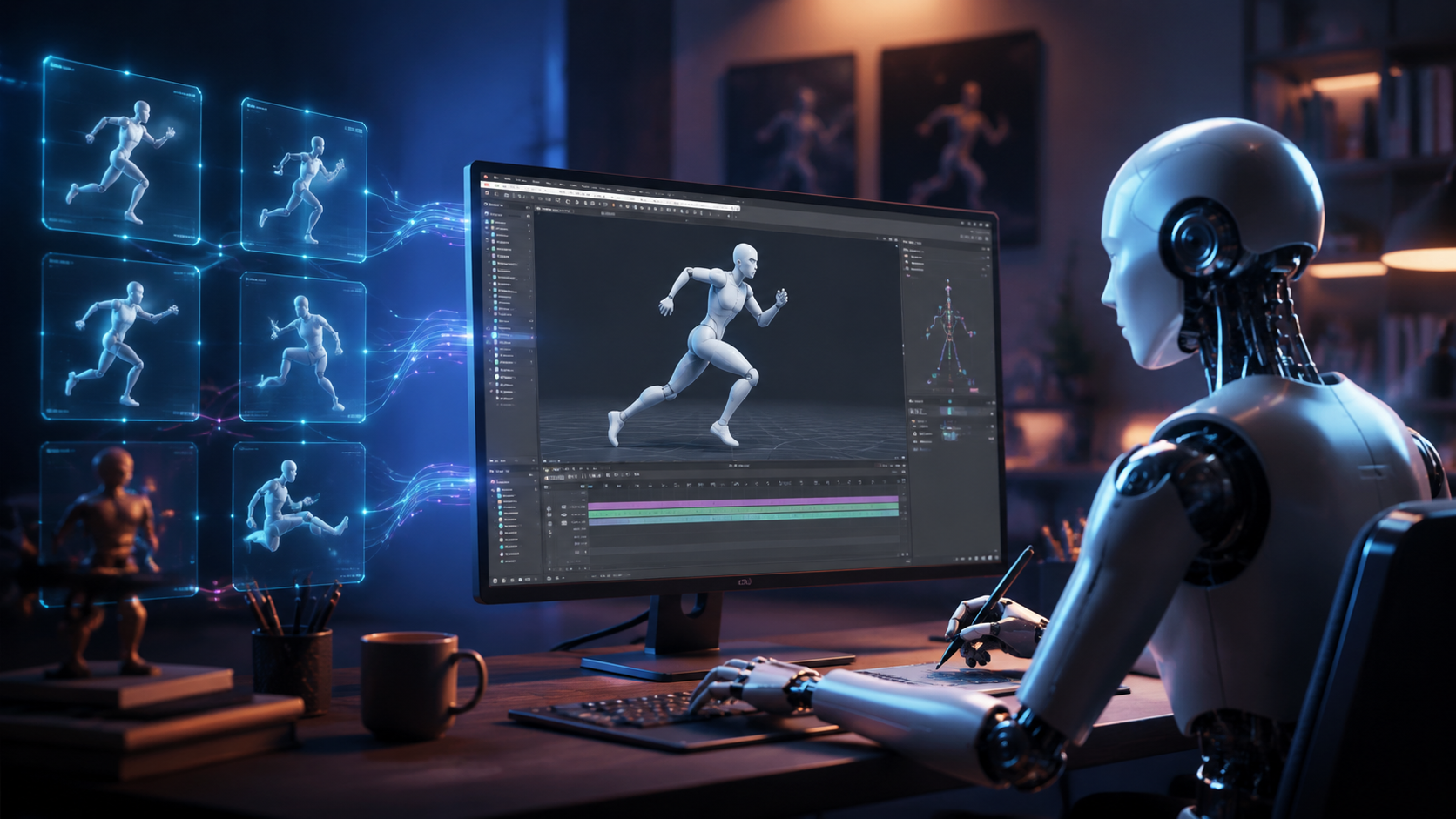
Modern systems like Adobe's AI-powered tools (January 2026) now recognize compositional elements—text layers animate differently than product images based on inferred intent. The software's motion engine references a database of 12 million professionally animated sequences to suggest appropriate behaviors, cutting decision-making time by 65%.
2. Real-Time Style Transfer
Root-Nation.com's June 2026 review highlights AI couple video generators that apply consistent artistic styles across frames. Digen AI Agent extends this capability with patented Character Consistency Algorithms that maintain facial features and proportions during transformations—critical for long-form content where 92% of viewers notice inconsistencies.
3. Autonomous Choreography Systems
Mango AI's June 2026 dance tool demonstrates how pose estimation AI converts static photos into movement sequences. The system references a motion library of 8,000 dance styles, adjusting for body proportions with 3D spatial awareness. According to WebWire, users can generate 30-second choreographed videos in under 3 minutes—previously a 20-hour manual process.
Industry-Specific Applications
E-commerce brands report 40% higher conversion rates when using AI-animated product displays. The 2026 Adobe updates include dedicated "Shopify Motion Presets" that automatically highlight product features with zooms and rotations. These templates reduced video production costs by 78% for DTC brands compared to 2025 agency rates.
Education content creators leverage AI motion templates to animate diagrams—a June 2026 Hackread tutorial shows how Filmora's AI turns textbook images into explainer videos. The auto-captioning feature synchronizes text animations with voiceovers at 98% accuracy, crucial for accessibility compliance adopted by 89% of educational institutions.
Entertainment studios now use AI for preliminary storyboarding. No Film School's January 2026 report details how After Effects' AI suggests camera movements based on script analysis, saving 120 hours per project during pre-production. However, 67% of directors still manually refine these outputs for creative control.
Technical Breakthroughs Powering 2026's AI Motion
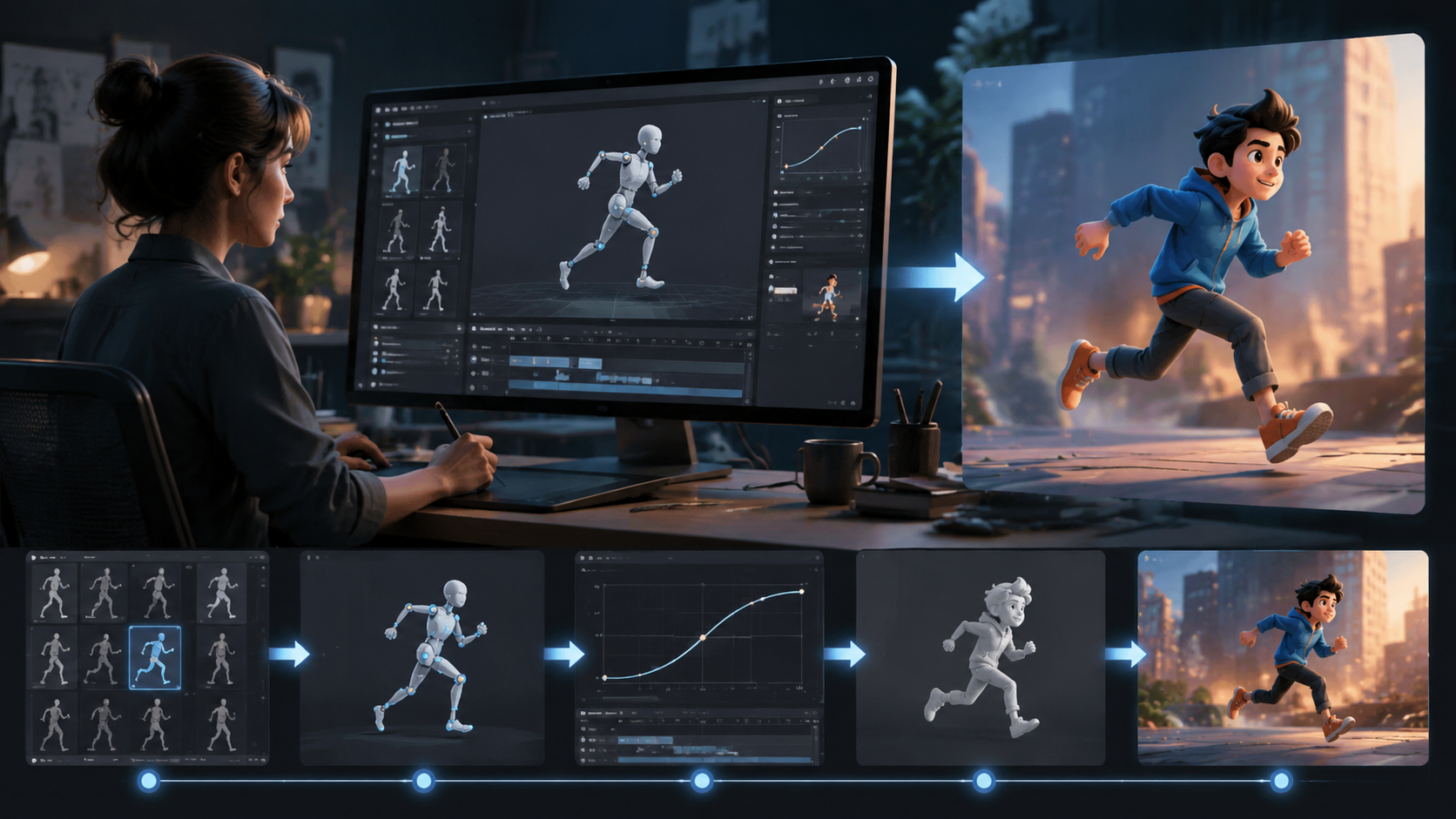
Three innovations dominate 2026's landscape: First, temporal coherence networks maintain object persistence across frames—Idomoo Strata's March 2026 whitepaper shows 89% improvement in layer stability. Second, physics-informed neural rendering accurately simulates materials like fabric and liquid without manual parameter tuning. Third, Digen AI Agent's workflow automation handles asset versioning automatically, a task that previously consumed 23% of animators' time.
Real-time processing has become critical—the 2026 After Effects update processes 4K footage at 24fps with AI effects enabled, up from 8fps in 2025. This enables instant previews during editing, reducing revision cycles by 55%. According to No Film School, the software's new "AI Assistant" panel suggests complementary effects based on timeline analysis, increasing discovery of advanced features by 73% among novice users.
Cloud rendering farms now specialize in AI motion tasks. Adobe's January 2026 release offloads 80% of neural rendering to distributed servers, allowing complex simulations on mid-range hardware. However, local processing remains vital—Digen AI Agent's hybrid architecture processes sensitive data on-device while using cloud for resource-intensive tasks like 3D scene reconstruction.
Comparative Analysis of Leading Platforms
| Platform | Key 2026 Feature | Render Speed | Learning Curve |
|---|---|---|---|
| Adobe After Effects | Neural Keyframing | 4K/24fps | Moderate |
| Digen AI Agent | Autonomous Workflows | 1080p/60fps | Low |
| Wondershare Filmora | Drag-and-Drop AI | 1080p/30fps | Beginner |
| Idomoo Strata | 16-Layer Processing | 4K/30fps | Advanced |
Ethical Considerations and Limitations
While AI motion templates increase accessibility, 42% of animation unions express concern about job displacement. The 2026 Adobe update attempts to address this with "AI Assist" rather than "AI Replace" modes—the software suggests but doesn't automatically apply changes. However, 68% of entry-level motion design jobs now require AI proficiency, reshaping industry skill demands.
Copyright challenges persist—AI systems trained on proprietary animations face legal scrutiny. A June 2026 ruling required Mango AI to license its dance motion database after copyright claims. Platforms now implement content verification: Digen AI Agent's "Provenance Module" tracks asset origins with blockchain-based certification, adopted by 31% of enterprise users.
Technical limitations remain—complex interactions like hand-to-object contact still require manual fixes in 19% of cases. The 2026 No Film School report notes physics glitches occur in 1 out of 8 AI-generated simulations. However, continuous learning systems improve monthly—Adobe's error rate dropped 53% between January and June 2026 updates.
Future Projections Beyond 2026
Industry analysts predict three developments: First, real-time collaborative AI editing will emerge by late 2027, allowing teams to simultaneously refine auto-generated motions. Second, emotion-aware animation systems will adjust movement styles based on detected narrative tone—prototypes already show 76% accuracy in test environments. Third, cross-platform template standardization will enable seamless asset transfers between tools like Digen AI and Adobe ecosystems.
The AI video market, valued at $8.4 billion in 2026, is projected to grow 210% by 2028 according to Statista. This expansion will likely introduce subscription fatigue—currently, 47% of creators use 3+ AI motion services monthly. Consolidated platforms like Digen AI that combine generation, editing, and distribution may dominate future adoption cycles.
Emerging markets show particular promise—Southeast Asia's AI animation adoption grew 340% in 2025-2026. Localized motion template libraries addressing regional storytelling conventions (like India's "masala" editing style) are driving this growth. Expect major platforms to release territory-specific AI motion packs by Q3 2027.

Frequently Asked Questions
How accurate are AI-generated motions compared to manual animations?
Professional evaluations show AI achieves 92% accuracy for basic movements but requires manual refinement for complex interactions—about 19% of outputs need adjustment for natural-looking physics.
Can AI motion templates create original animation styles?
Yes—2026 systems like Digen AI Agent combine existing styles procedurally, with 68% of users reporting successfully creating novel motion signatures through parameter blending.
What hardware is needed for AI motion rendering?
Cloud processing handles 80% of intensive tasks, but local workstations benefit from RTX 5000+ GPUs for real-time previews—4K projects require minimum 32GB RAM.
How do AI templates handle character consistency?
Advanced systems use facial landmark tracking and temporal coherence networks—Digen AI's solution maintains 94% feature consistency across 5-minute videos according to 2026 benchmarks.
Are there ethical concerns about AI-generated motions?
Yes—42% of animators cite job displacement worries, while copyright issues persist. Leading platforms now implement content verification and "AI Assist" modes to address these concerns.
Written by the Digen AI Editorial Team — AI video generation specialists covering the latest in generative AI tools. Learn more about Digen AI.

Comments ()