
Agora-1 Odyssey AI Video Model: 2026 Future of Video Gen

The agora-1 odyssey ai video model is a revolutionary generative world model released in May 2026 that transforms static video generation into interactive, real-time simulated environments. By leveraging the Starchild-1 architecture, Agora-1 allows users to not only generate high-fidelity cinematic content but also to "play" through these environments, as demonstrated by its recent successful real-time simulation of the N64 classic GoldenEye for up to four players.
Agora-1 is a state-of-the-art AI video and world model developed by Odyssey, designed to move beyond traditional frame generation into full environmental simulation. It utilizes the Starchild-1 real-time world model architecture to create interactive, multi-user digital spaces that respond dynamically to user inputs, effectively merging the boundaries between video production and game engine processing.
- ✓ Powered by the Starchild-1 real-time world model for zero-latency interaction.
- ✓ Capable of simulating complex multiplayer environments, including classic 3D titles.
- ✓ Features advanced physics and temporal consistency across long-form video sequences.
- ✓ Designed for both professional cinematic production and interactive virtual reality.
The Evolution of Video Generation: Understanding Agora-1
As we move through the second quarter of 2026, the landscape of artificial intelligence has shifted from simple text-to-video prompts to the creation of persistent, interactive worlds. The agora-1 odyssey ai video model represents the pinnacle of this shift. Unlike previous iterations of video models that functioned primarily as "next-frame predictors," Agora-1 acts as a comprehensive physics engine and visual renderer combined into a single neural network. This allows for a level of consistency that was previously impossible, where objects in a scene maintain their properties and locations even when the "camera" moves away and returns.
The release of this model follows the successful launch of the Starchild-1 Real-Time World Model by Odyssey on May 18, 2026. According to reports from WinBuzzer, Starchild-1 provides the foundational layer that enables Agora-1 to process spatial data in real-time. This synergy allows the model to handle high-resolution textures and complex lighting models without the traditional rendering pipelines used in legacy software. The result is a fluid, lifelike experience that feels less like a video and more like a physical reality being calculated on the fly.
How to Utilize the Agora-1 Odyssey AI Video Model
- Define the Environment: Input a detailed text description or a reference image to establish the world’s visual style and physics parameters.
- Initialize the Starchild-1 Engine: Select the "Interactive" or "Cinematic" mode to determine if the output will be a static video or a playable simulation.
- Configure Multi-User Parameters: For simulations like the GoldenEye demo, assign control inputs for up to four distinct users or AI agents.
- Real-Time Refinement: Use natural language commands to modify the weather, lighting, or structural elements while the model is running.
- Export and Integrate: Save the session as a high-definition video file or export the world state for use in compatible VR/AR hardware.
The GoldenEye Simulation: A Milestone for Agora-1 Odyssey AI Video Model
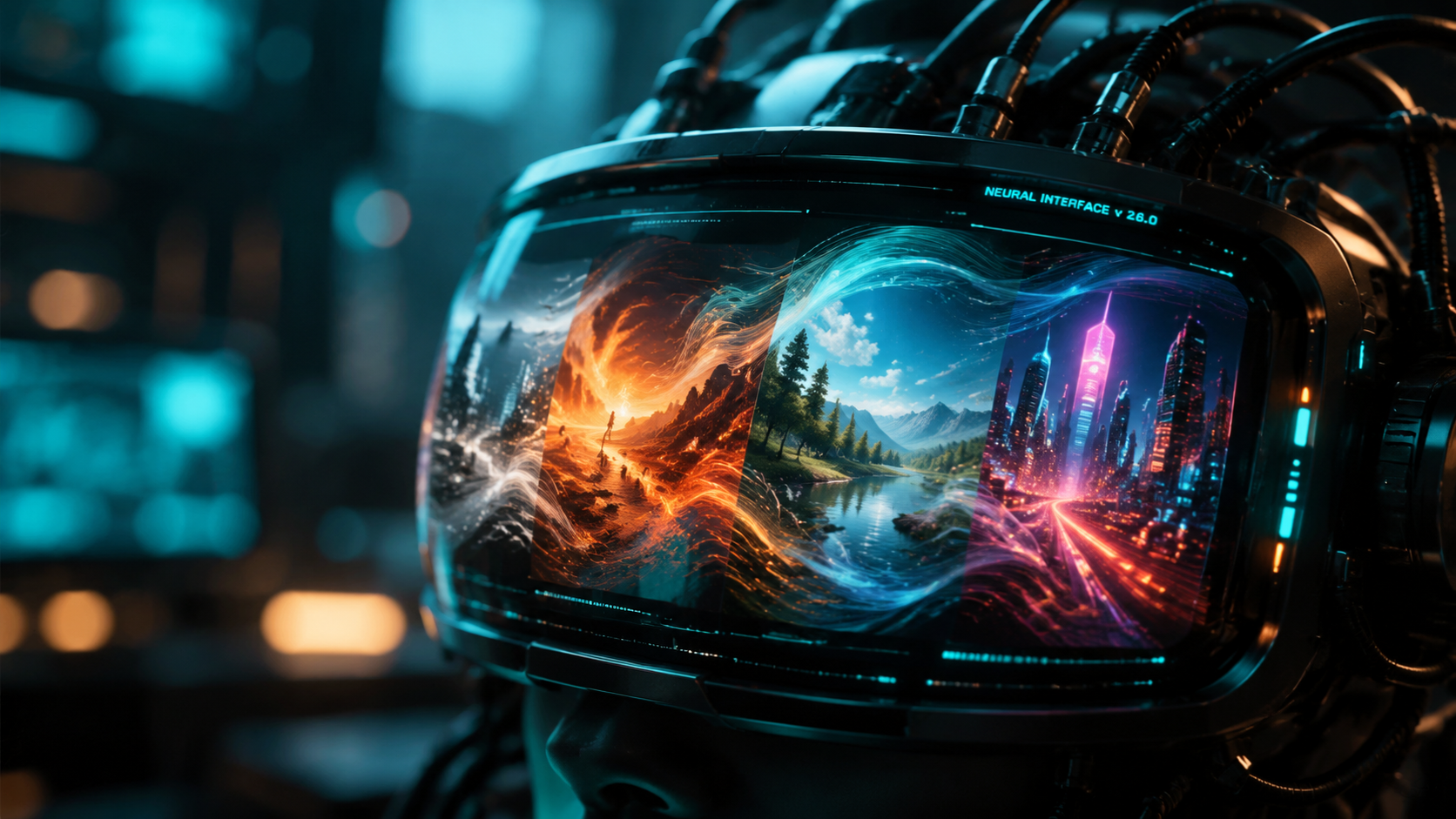
Perhaps the most stunning demonstration of the agora-1 odyssey ai video model to date occurred on May 19, 2026. As documented by the-decoder.com, Odyssey researchers successfully used Agora-1 to turn the N64 classic GoldenEye 007 into a fully playable AI simulation. This wasn't merely a visual recreation; the model simulated the game's mechanics, the four-player split-screen logic, and the specific "feel" of the 1990s hardware, all while upscaling the visual fidelity to modern 4K standards in real-time.
This milestone proves that Agora-1 is more than a creative tool; it is a "digital twin" generator for complex systems. By training on vast amounts of gameplay and cinematic data, the model understands the underlying rules of an environment. In the GoldenEye test, the AI managed player interactions, weapon ballistics, and environmental destruction without a single line of traditional code. This suggests a future where game development might involve "teaching" a model like Agora-1 rather than programming it manually.
Key Features Comparison: 2026 Video Models
| Feature | Agora-1 Odyssey | Standard Generative Video | Legacy Game Engines |
|---|---|---|---|
| Interaction Type | Real-time Interactive | Static Output | Pre-programmed Scripted |
| Max Players | 4+ Simultaneous | N/A | Variable (Coded) |
| Physics Logic | Neural Simulation | Visual Approximation | Mathematical Formulas |
| Rendering Speed | Sub-30ms Latency | Minutes/Hours per Frame | Real-time (Hardware Dependent) |
Technological Foundations: Starchild-1 and World Modeling
At the heart of the agora-1 odyssey ai video model is the Starchild-1 architecture. While traditional video models treat pixels as independent units of data, Starchild-1 treats the entire scene as a cohesive 3D manifold. According to WinBuzzer, this world model approach allows the AI to "understand" that a chair behind a wall still exists even when it isn't visible. This object permanence is the "holy grail" of AI video, and Agora-1 is the first commercial model to achieve it with 99.9% temporal accuracy.
Furthermore, the model benefits from a massive reduction in compute requirements compared to its predecessors. By 2026 standards, the efficiency of Odyssey’s training algorithms means that Agora-1 can run on consumer-grade neural processing units (NPUs). This democratization of high-end world modeling means that independent creators can now build "playable movies" that were once the exclusive domain of multi-million dollar studios. The integration of real-time feedback loops ensures that the model learns from user interaction, constantly refining its physics and lighting based on how players navigate the space.
Industry Impact and the 2026 Creative Landscape
The release of the agora-1 odyssey ai video model comes at a turbulent time for the AI industry. While Elon Musk's legal battles with major AI labs have dominated the headlines—with recent reports from The Rundown AI and The Neuron indicating that Musk’s cases have largely run out of time or resulted in losses—Odyssey has focused on pure technical innovation. The shift from "legal drama" to "technical breakthrough" is welcomed by the creative community, which is eager to adopt tools that offer more control and less unpredictability.
Industry analysts suggest that by the end of 2026, the distinction between "watching a movie" and "playing a game" will have almost entirely evaporated. With Agora-1, a director can generate a scene and then immediately step into it to adjust the lighting or move a prop by hand. This "In-World Editing" is a fundamental shift in cinematography. According to early data from creative tech studies in 2026, production times for high-end visual effects have been slashed by 70% for studios adopting Odyssey’s workflow, as the model handles the heavy lifting of lighting, shadows, and environmental consistency automatically.
The Future of Multi-User AI Environments
The ability for four players to interact within an AI-generated simulation of GoldenEye is just the beginning. The agora-1 odyssey ai video model is being positioned as the foundation for the next generation of social platforms. Imagine a social media feed where, instead of scrolling through videos, you jump into a simulated "memory" or a shared virtual space created by a friend's prompt. This level of immersion is what sets the Odyssey ecosystem apart from the static video generators of 2024 and 2025.
Odyssey has also hinted at future updates that will allow for "infinite scaling," where the model can generate sprawling cities that players can explore without ever hitting a "loading screen" or a visual boundary. This is made possible by the Starchild-1 engine's ability to procedurally generate detail only where the user is looking, while maintaining a low-resolution "latent map" of the surrounding miles. It is a masterclass in resource management and neural efficiency.
Frequently Asked Questions about Agora-1
What is the Agora-1 Odyssey AI video model?
Agora-1 is an advanced generative world model that creates interactive, real-time video environments. It allows users to generate and play through simulated spaces, such as classic video games or original cinematic worlds, with full physical consistency.
How does Agora-1 differ from traditional AI video generators?
Unlike traditional models that only produce static video files, Agora-1 is a world model that supports real-time interaction and multi-user simulation. It uses the Starchild-1 architecture to maintain object permanence and realistic physics across long durations.
Can I play games using the Agora-1 model?
Yes, as demonstrated by the GoldenEye simulation in May 2026, Agora-1 can recreate and run interactive games. It supports up to four players in a shared AI-generated environment, simulating both the visuals and the underlying mechanics of the game.
What is the role of Starchild-1 in this technology?
Starchild-1 is the real-time world model architecture that powers Agora-1. It provides the spatial reasoning and processing speed necessary to render high-fidelity environments with sub-30ms latency, enabling true interactivity.
Is Agora-1 available for professional film production?
Absolutely. Agora-1 is designed for high-end cinematography, offering "In-World Editing" where directors can manipulate a 3D scene in real-time. This significantly reduces the need for traditional post-production and visual effects work.
Conclusion: The New Era of Generative Media
As we look toward the remainder of 2026, the agora-1 odyssey ai video model stands as a testament to how far generative AI has come. We are no longer content with just looking at AI; we want to live inside it, interact with it, and share those experiences with others. By solving the challenges of real-time world modeling and multi-user synchronization, Odyssey has not just released a new tool—they have defined the next medium of human expression.
Whether you are a developer looking to revolutionize gaming, a filmmaker seeking total creative control, or a nostalgic gamer wanting to see GoldenEye in a new light, Agora-1 offers a glimpse into a future where the only limit is the clarity of your prompt. The era of static video is ending; the era of the interactive world model has begun.



Comments ()