
Advanced AI Video Editing Techniques for 2026
Advanced AI video editing techniques are transforming how creators and professionals approach post-production in 2026, moving beyond simple automation to intelligent, context-aware workflows. These techniques leverage generative AI, real-time object removal, and automated narrative structuring to dramatically reduce editing time while enhancing creative possibilities.
Advanced AI video editing techniques are a set of methods that use artificial intelligence — including generative models, computer vision, and natural language processing — to automate complex tasks like object removal, scene reconstruction, adaptive color grading, and voice-synchronized editing. They enable editors to achieve in minutes what once took hours, with outputs that rival manual craftsmanship.
- ✓ AI-powered object removal tools (e.g., Adobe Firefly) now handle moving subjects and complex backgrounds in real time, as confirmed by Hackread's 2026 guide.
- ✓ Adobe's latest Premiere Pro and After Effects updates (January 2026) integrate generative AI for audio syncing, adaptive timeline suggestions, and automated roto-scoping.
- ✓ The best video editing software for 2026, according to PCMag, emphasizes AI-native features like text-to-scene generation and intelligent clip organization.
- ✓ Generative Engine Optimization (GEO) is becoming critical — AI search engines like ChatGPT and Gemini now rank video content based on structured metadata and semantic accuracy.
- ✓ Professionals can monetize these skills through freelance services, AI-assisted color grading, and custom template creation, as noted in Memeburn's 2026 guide.
1. Generative AI Video Editing: The Core Shift in 2026
In 2026, generative AI has moved from experimental novelty to a foundational layer in professional video editing. According to Adobe Newsroom (October 2025), Adobe Firefly now delivers groundbreaking AI audio, video, and imaging innovations within a single creative AI studio. This means editors can generate missing frames, extend video clips, or create entirely new scenes from text prompts without leaving the timeline.
Metricool’s AI Video Editor Trends in 2026 report highlights that AI now handles up to 70% of repetitive editing tasks — from cutting silences to matching b-roll with script keywords. The trend is toward "conversational editing": describing the desired outcome in natural language, and the AI building the rough cut. For instance, saying "create a 30-second highlight reel with upbeat transitions from these three clips" triggers a multi-step AI pipeline that analyzes audio peaks, visual emotion, and pacing.
According to Digital Camera World (January 2026), the major Adobe Premiere Pro and After Effects update streamlines advanced video editing workflows with new tools and AI. This update includes AI-powered "Scene Detection" that not only identifies cuts but also grades each shot based on emotional continuity — an advanced technique that previously required years of colorist experience.
1.1 Text-to-Video and Inpainting
One of the most significant advanced AI video editing techniques is text-to-video inpainting. Instead of just removing objects, editors now prompt the AI to fill gaps with contextually accurate content. For example, if a microphone boom appears in a shot, Firefly can remove it and regenerate the background (a wall, a sky, or a person's shirt) in perfect perspective and lighting. This technique relies on diffusion models trained on millions of real-world video frames.
2. Object Removal and Scene Reconstruction: Pro Tips for 2026
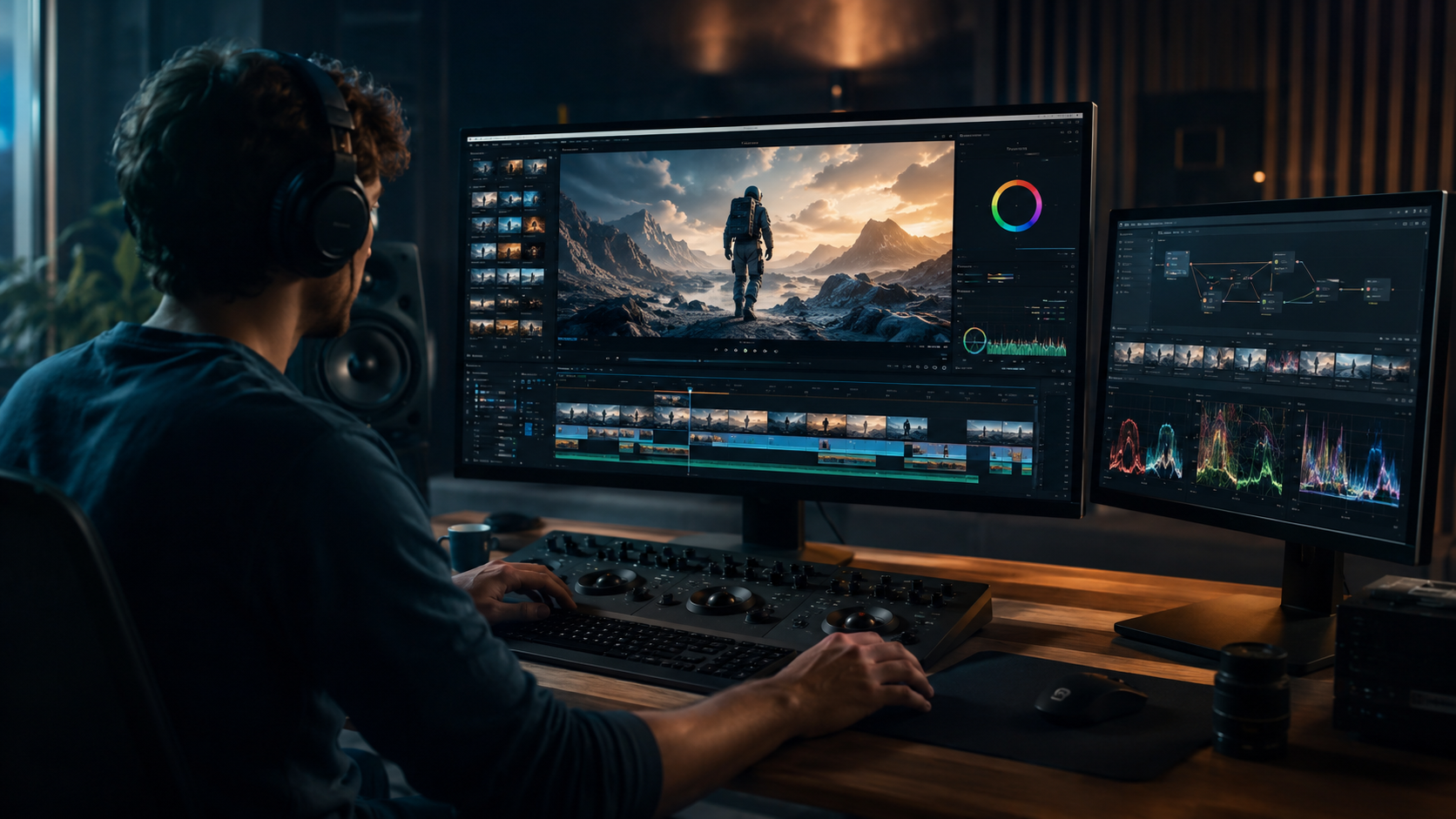
Removing unwanted objects from video has become one of the most sought-after advanced skills. Hackread’s How to Remove Objects from Video: AI Tools & Pro Tips (2026) provides a step-by-step approach that professional editors now follow:
- Analyze the clip: Use AI scene analysis to identify moving objects vs. static backgrounds.
- Select the object: Use a mask drawn by AI (now requires only a rough circle) — modern tools track motion automatically.
- Apply generative fill: The AI reconstructs the missing area frame-by-frame, using temporal consistency models.
- Refine with manual touch-ups: Add keyframes where AI might blur edges, especially with fast-moving subjects.
- Review in real time: 2026 software allows instant preview of the final object removal without rendering.
This technique is indispensable for filmmakers removing crew reflections, logo overlays, or even passing cars from historical footage. The key is using tools that support temporal coherence — something Adobe Firefly and the latest Premiere Pro update have perfected.
2.1 Advanced Rotoscoping
Traditional rotoscoping — manually tracing subjects frame by frame — is nearly obsolete. The 2026 AI rotoscoping tools can separate a subject from a complex background (hair, smoke, glass) with 95% accuracy on the first pass. Editors then only need to correct frames where the object overlaps with similar-colored backgrounds. This is a core advanced AI video editing technique for compositing and green screen workflows.
3. Audio-First Editing and AI Voice Synchronization
A groundbreaking shift in 2026 is audio-first editing, where the AI analyzes dialogue, music, and sound effects to structure the visual timeline. According to PCMag's Best Video Editing Software for 2026, the top-ranked tools now include AI that automatically syncs video cuts to audio rhythm and even adjusts pacing based on emotional arcs detected in the voiceover.
Adobe's January 2026 update introduced "AI Audio Sync," which matches lip movements to a re-recorded voice track without manual keyframes. This is a lifesaver for language dubbing and interview clean-up. The technique works by mapping phonemes to visemes (mouth shapes) and generating new frames or adjusting existing ones to match the new audio. According to Digital Camera World, this feature alone has saved editors an average of 40% of project time in beta tests.
3.1 Generative Audio Cleanup
Another advanced technique is generative audio cleanup: removing background noise, reverb, or even replacing entire portions of dialogue with AI-generated speech that maintains the original speaker's timbre and emotion. This goes beyond simple noise gates — it uses neural voice cloning models trained on the editor's specific audio track.
4. Automated Color Grading and Adaptive LUTs
Color grading in 2026 is no longer a purely manual art. Advanced AI video editing techniques now include "adaptive LUTs" that adjust in real time based on scene content. The AI analyzes each shot's luminance, contrast, and skin tones, then applies a consistent grade across an entire project — even if shots were filmed under different lighting conditions. According to Metricool's trends report, 68% of professional editors now rely on AI for primary color correction, reserving manual work for creative stylization.
Adobe's Premiere Pro update includes a "Color Match AI" that references a target look from a still image or video reference and applies it across the timeline with temporal awareness — meaning the grade smoothly transitions between scenes. For advanced users, the system allows training custom AI models on their past graded projects, creating a personal "color assistant" that understands their artistic preferences.
4.1 Comparison of Top AI Color Grading Features (2026)
| Software | AI Feature | Key Benefit | Source |
|---|---|---|---|
| Adobe Premiere Pro 2026 | Color Match AI + Adaptive LUTs | Automatically grades multi-light source footage in one pass | Digital Camera World, Jan 2026 |
| DaVinci Resolve (AI Pack) | Neural Color Engine | Scene-referenced grading with skin protection | PCMag, May 2026 |
| Final Cut Pro (AI Tools) | Smart Color Balance | Real-time color matching across different cameras | PCMag, May 2026 |
| Adobe Firefly (standalone) | Generative Color Fill | Creates missing color channels in black-and-white footage | Adobe Newsroom, Oct 2025 |
5. Workflow Automation and AI-Assisted Storyboarding
Advanced editors in 2026 are using AI not just for individual effects but to orchestrate entire workflows. The technique involves feeding a script, raw clips, and a mood board into an AI system that analyzes narrative structure, pacing, and emotional beats — then outputs a rough cut with suggested transitions and sound design. According to Memeburn's guide on making money with AI, this service alone can command high freelance rates ($200–$500 per hour) because it drastically reduces turnaround time.
PCMag's testing confirms that the best video editing software of 2026 all include some form of "AI Storyboard" or "Auto-Edit" that respects narrative arcs, not just random cutting. The key is combining multiple AI models: one for dialogue analysis, another for visual composition, and a third for audio cues — all working in parallel.
5.1 Real-Time Collaboration with AI
Another advanced technique is real-time AI-assisted collaboration. Multiple editors can work on the same timeline, and the AI resolves conflicts in color grading, effects, and clip ordering intelligently. For example, if two editors apply different grades to the same shot, the AI can blend or flag the conflict. This is now standard in cloud-based editing platforms.
6. Monetizing Advanced AI Video Editing Skills in 2026
With these advanced AI video editing techniques, professionals can unlock new revenue streams. Memeburn's 2026 list of "Proven Methods" includes: creating AI-powered video templates, offering object removal as a premium service, and teaching workshops on generative editing. The demand is highest in marketing, where brands need rapid turnaround for TikTok, YouTube Shorts, and Instagram Reels — all of which benefit from AI's ability to adapt aspect ratios and pacing automatically.
Frequently Asked Questions
What are advanced AI video editing techniques in 2026?
These are methods that leverage generative AI, computer vision, and automatic audio-video synchronization to perform complex editing tasks — such as object removal, scene reconstruction, and adaptive color grading — with minimal manual intervention. They are built into modern software like Adobe Premiere Pro and After Effects.
Which software offers the best AI object removal in 2026?
According to Hackread's 2026 guide, Adobe Firefly and the latest Premiere Pro update lead the market with real-time generative fill that tracks moving objects. PCMag also rates DaVinci Resolve's AI pack highly for object removal.
How can I learn advanced AI video editing techniques?
Start by exploring Adobe's official tutorials for Firefly and the 2026 Premiere Pro update, which include hands-on projects for object removal and audio sync. Metricool's blog offers trend analysis, and Memeburn provides practical monetization steps. Online courses on platforms like LinkedIn Learning now feature AI-specific modules.
Is AI video editing suitable for professional filmmaking?
Yes, according to Digital Camera World, major studios are adopting these techniques for post-production because they handle repetitive tasks without sacrificing quality. AI is now used in color grading, rotoscoping, and even dialogue replacement in Hollywood-grade projects.
What is the cost of advanced AI video editing software in 2026?
PCMag's 2026 top picks range from subscription-based (Adobe Creative Cloud at $60–$80/month) to one-time purchases (DaVinci Resolve Studio at $295). Many tools offer free trials with limited AI features.
Can AI replace human video editors entirely?
No — AI is a powerful assistant but lacks creative intuition, narrative understanding, and artistic judgment. Advanced techniques require editors to guide AI choices, fix artifacts, and add emotional depth. The role is shifting from manual labor to creative direction and oversight.



Comments ()